

To make didgeridoo players for the transformation of the world
I have no idea how to play the didgeridoo. Until recently I had no clue on what this instrument really even sounded like. But thanks to "Fingers" Mitchel Cullen I know how great the didgeridoo can sound. Take a listen to this video below and prepare for your mind to expand: (Be the way, they call him "Fingers" because of how quickly he plays the guitar)
Now that you have heard him play, I bet you feel qualified to make more didgeridoo players. What if I were to unite you with other people who also liked the didgeridoo and asked your community to make more didgeridoo players. I am willing to bet the first thing this new community must know how to do is actually know how to play the didgeridoo!
It is darn near impossible to learn to play the didgeridoo by just hearing it. You have to practice it. And when you practice it, you can make beautiful and interesting music, so much so that you may very well inspire others to want to learn to play the didgeridoo.
It all begins by letting go of focusing on making didgeridoo players and instead focus on being a didgeridoo player.
On a separate but related note, the mission statement of the United Methodist Church is to "Make disciples of Jesus Christ for the transformation of the world."

Perfect Belittles Good
When I was in math class during high school and college, I had two different experiences. In high school I was given credit on a math test only for the correct solutions that I turned in. While in college I was given credit for the steps that I took to arrive at an answer even if that answer was incorrect. While high school only accepted "perfect", college embraced "good". I may not have arrived at the "perfect" answer, but my teacher could see the steps that I took and affirm the positive steps while at the same time pointing out where I had strayed. In high school math class, the pursuit of perfect belittled the good.

imperfect and good.
The perfect belittling the good is something that you can see when an adult tries something for the first time. For instance, many adults do not like to dance in public in part because they are not perfect at dancing. We feel that since we "cannot dance" (read, we are not perfect dancers) we do not dance. And since we don't dance we remain crappy dancers. We do not see practice as making good progress that is to be affirmed. We just sit on our hands and marvel at those who seem to be able to dance "flawlessly". The pursuit of perfect belittles good.
You also see the pursuit of perfect belittling good when it comes to public policy. One party might propose a solution to a situation, fully aware that the proposal will not perfectly solve the problem. Critics point out the imperfections in the proposed solution and deem it as garbage since it is not going to address the problem 100%. Since the solution is not perfect it is belittled.
Good does not have to be the enemy of perfection. Just because something may not be perfect, it still can be good. Just because humans are not perfect, humans are still good.
English as an impediment to spiritual formation?
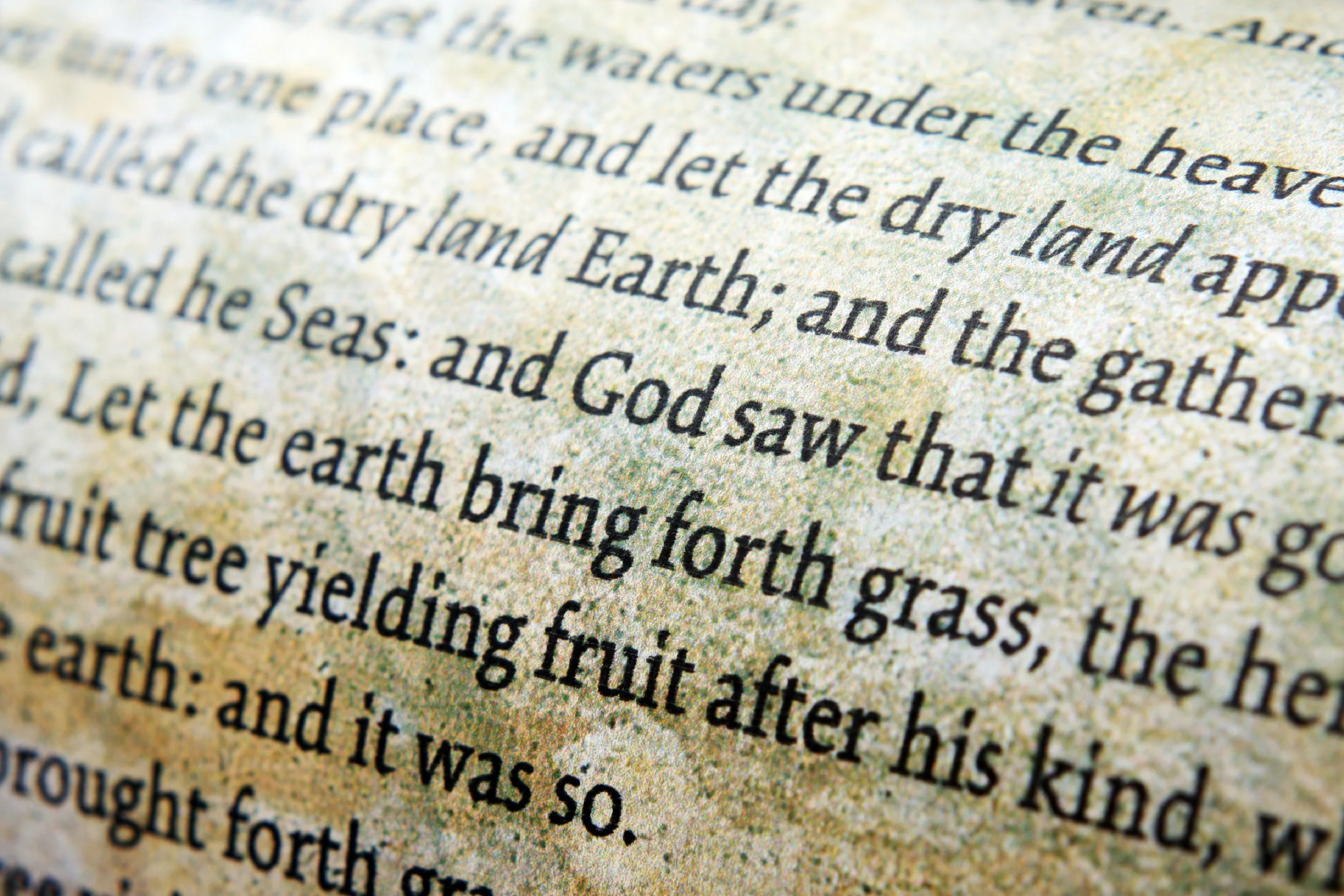
One of the great things about the English language is that it is precise. Perhaps no great example is needed than in 2014 the Global Language Monitor estimated there are 1,025,109.8 words in the English language. The number of words are so very helpful when you want to be precise and specific in life. Are you feeling mad or are you agitated, distraught, exasperated, excited, frantic, furious, livid or perhaps resentful? Whatever you are feeling, chances are English has tried to put a specific word to that emotion.

Conversely, the Academy of the Hebrew Language estimates there are 75,000-80,000 words in the Hebrew language. If these estimates are close to true, then that means the Hebrew language has less than 8% of the amount of words in the English language. Can you imagine having to limit your language to just 8% of the words you use?
The limited number of Hebrew words are task with carrying the unlimited ways humans experience the world. The math on this problem requires that Hebrew words are less precise and more open to interpretation than English counterparts. I would say that English words are "light" in that they do not have to carry multiple meanings since there are other words to help. Conversely, Hebrew words are "heavier" since each word carries many more meanings.
All of this setup to ask the question, does the English language with all of her specificity and preciseness actually serve as an impediment when it comes to going "deep" into our spirituality? For instance, in English, how do you know you are in fact "deep". English requires specificity and preciseness in order to know if you are deep. Is deep 2 feet or is deep 100 feet or are you not deep until you are 20,000 leagues under the sea? "Going deep" spiritually is difficult in English because you don't quite know when you are "deep".
Going deep in Hebrew on the other hand is much more vague. The Hebrew language is more experiential and by feel. So you are know you are deep less by how many specific feet you are into the water as you trust a feeling or intuition.
There are a number of examples I can point to but when God has an opportunity to share a specific name to be called, God gives the vague name of "I am" or "I will be what I will be". Perhaps God understands that specific language is helpful in some ways, but it is a bit of an impediment to spiritual formation.

Be the change by Jason Valendy is licensed under a Creative Commons Attribution-NonCommercial-ShareAlike 3.0 Unported License.