
Christianity as a journey - not for me
There is this interesting paradox in the way many of us understand the Christian tradition. We have been taught that to be Christian is to have a set of responses to questions. So to be Christian means to believe a set of criteria and if you do not believe these criteria then you are not Christian.
When though of this way, religion is nothing more than a contract one takes with a immature understanding of God. If we assent or believe in X, Y and/or Z then we will get A, B, and/or C. It is a forward way to live life but it is not a life that I find worthwhile.
Some people talk about religion as a journey. This seems to be a little better and far more common way to talk about religion. I have always had a difficult time with this image as a primary understanding to discuss religion because journeys are generally spoken of as having a destination. Few go on a journey without being prepared or having a destination in mind. Like the contact image above, the journey image works for people but it is an image that I find lacking in too many ways to make it my primary image for understanding Christianity.
Rather, I tend to think of religion as a search. To take a quote from John Caputo on this podcast, "When you are searching for something that you are at a loss for what you are looking for the search more earnest and radical."
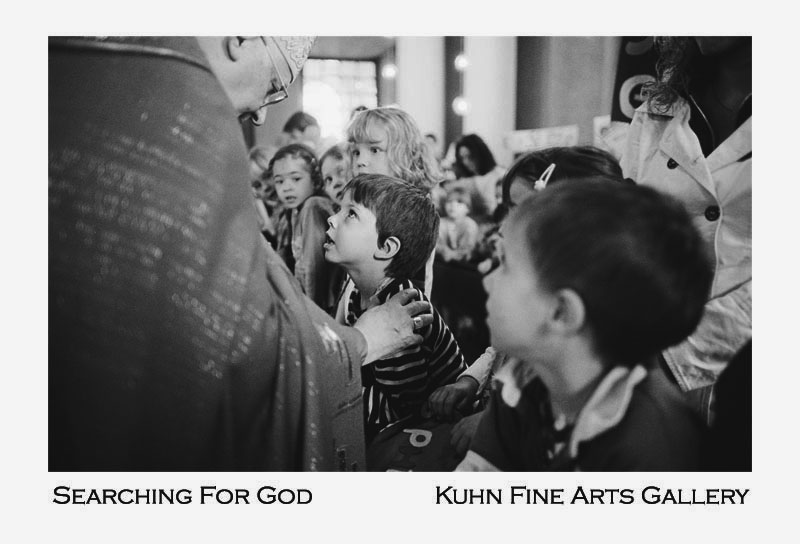 We say we know what God is and what God is like. We say we know what we are looking for as if we would know it once/if we saw it. Frankly, I just am not sure if I could spot God as easily as I can spot my car keys tucked in the couch.
I continue to search and search, hoping to one day discover what I have been searching for. But until that day, of if that day never comes, I delight in the search.
When though of this way, religion is nothing more than a contract one takes with a immature understanding of God. If we assent or believe in X, Y and/or Z then we will get A, B, and/or C. It is a forward way to live life but it is not a life that I find worthwhile.
Some people talk about religion as a journey. This seems to be a little better and far more common way to talk about religion. I have always had a difficult time with this image as a primary understanding to discuss religion because journeys are generally spoken of as having a destination. Few go on a journey without being prepared or having a destination in mind. Like the contact image above, the journey image works for people but it is an image that I find lacking in too many ways to make it my primary image for understanding Christianity.
Rather, I tend to think of religion as a search. To take a quote from John Caputo on this podcast, "When you are searching for something that you are at a loss for what you are looking for the search more earnest and radical."
We say we know what God is and what God is like. We say we know what we are looking for as if we would know it once/if we saw it. Frankly, I just am not sure if I could spot God as easily as I can spot my car keys tucked in the couch.I continue to search and search, hoping to one day discover what I have been searching for. But until that day, of if that day never comes, I delight in the search.
Eating ourselves into immaturity?
Corn, wheat and soy are the top three crops subsidized in the United States. While there is an ongoing debate about the intended and the unintended consequences of subsidizing these crops something struck me the other day while listening to this Freakonomics Podcast about food.
From minute 10 to minute 11 you hear the following lines:

Food is much more for children, and children, I am sorry to say, do not have great taste in food. They like soft they like sweet they like Wonder Bread. So American food become food for children.
It got me thinking. If we are what we eat and our food is heavily dependent upon the things kids like (corn, wheat, and soy) then are we literally creating a negative feedback loop where even the very food we are producing is jeopardizing the maturation process of Americans?
All around there is a vast void of maturity in our culture. We live in the time of road rage, an unwillingness to compromise and botox. Are these just not adult expressions of temper tantrums of babies, selfish behavior of toddlers and mirror obsession of teens?
If the "medium is the message", then what message are we telling our bodies when we feed it food that immature children would choose?
From minute 10 to minute 11 you hear the following lines:
Food is much more for children, and children, I am sorry to say, do not have great taste in food. They like soft they like sweet they like Wonder Bread. So American food become food for children.
It got me thinking. If we are what we eat and our food is heavily dependent upon the things kids like (corn, wheat, and soy) then are we literally creating a negative feedback loop where even the very food we are producing is jeopardizing the maturation process of Americans?
All around there is a vast void of maturity in our culture. We live in the time of road rage, an unwillingness to compromise and botox. Are these just not adult expressions of temper tantrums of babies, selfish behavior of toddlers and mirror obsession of teens?
If the "medium is the message", then what message are we telling our bodies when we feed it food that immature children would choose?
"Christianity is not a religion of virtue"
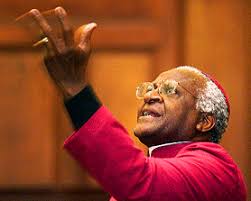
Just a reminder of what Desmond Tutu said, "Christianity is not a religion of virtue; it is a religion of grace."

Be the change by Jason Valendy is licensed under a Creative Commons Attribution-NonCommercial-ShareAlike 3.0 Unported License.