
Breathing breaks
I have noticed the suspension of movement when I breathe.
When I am taking deep breaths, between the inhale and exhale there is a moment in which air is not moving in or out of my lungs. My breath, like the ball at the apex, is suspended.
There is something about this for me. Not only is breathing a critical part to life, but also being still is vital.
Ever tried to breath like a dog or take many breaths without a short pause between breaths? If you are like me, then you are getting dizzy every time. It is that space between the breath that so much takes place. It is in the stillness that life continues to happen.
And so, listen to your breathing not just on the inhale or exhale, but even on the rests.
Beyond Orthodoxy and Orthopraxy - part 2
This process of discovering orthokardia is like learning a second language. When we first begin a new language, we are focused on the right words. Once the vocabulary is to a point, we then begin to work on the correct way to say the words (rolling the 'r' or pronouncing the umlaut). As we speak this second language we are at first really speaking our first language then translating in our heads what that word combination would be in our second language. With practice, we begin to shift from translating to just speaking. We being to think in terms of the second language and not our first. It is a wonderful transition and critical to anyone who wants to be fluent in languages.
Orthokardia is much like this. While we are focused on what people, think about giving or what they give to, we are not encouraging orthokardia. It is not enough to convince people to give or to give to specific causes, orthokardia is about making generous people. People who do not need to be told to give of their time or money or energy, but people who are aware of the numerous ways to be generous all around them.
It is an easy thing to get people to give compared to creating generous people. It is an easy thing to get people to understand the value of learning the story of Jesus compared to helping create "little Christs". It is very easy to pick out people who do not believe the right things or do the right things compared to those who have correct orthokardia.
Beyond Orthodox and Orthopraxy
Ortho - from the Greek
orthos
("right", "true", "straight")
Dox - from the Greek
("opinion" or "belief", related to
dokein
, "to think"
Much of the church focuses on the "right belief" of the parishioners. Many of the conversations I have with people are rooted in what is orthodox Christian thought and what is not. The current state of the Church places a premium on orthodox thought. The thing is orthodox thought is not just the idol of the Church but of our world. We have a desire to ensure that people have the right thoughts on things.
This is not a "bad" thing, but when orthodoxy is out of balance with orthopraxy (p
rax - from the Greek
praxia
"action", "activity") then things get a little weird. This imbalance can be seen when members of the Church will preach love but stand stand on corners and condemn the "heretics" (heresy - from the Greek
hairetikos
meaning "able to choose").
Arguing orthodox thought happens in the world of science as well as the debate of climate change rages on or the debates of the mysteries of the world continue to perplex the mind.
The church spends a lot of time getting people to orthodox thought. For instance, the church teaches people that it is a good thing to give of their time, talents gifts and service to the world. The belief that giving is a good thing is "orthodox" in Christian thought, and the church is a place to instill that idea into the minds of people.
In order to ensure that orthodox is not out of balance, there is orthopraxy - which has come to mean "doing the right things". It is not enough to intellectually know about the importance of giving, but if you want to be a Christian you must
actually
give. It is in the doing of faith that faith is given flesh. It is the whole, "It is not what you say but it is what you do" mentality. Orthopraxy is meant to be a counter-weight to orthodoxy.
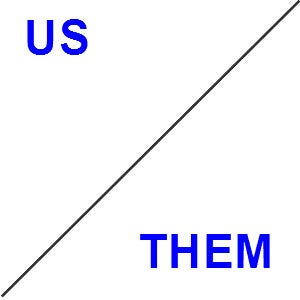
But like all weight and counter-weights, this creates a dichotomy that ends up pitting one against the other. So you have people in the church that place the importance on ensuring people have the right beliefs and then there are people who are not concerned with beliefs but are invested to ensure we are doing right actions. Christians talk about the balance between "faith" and "works".
The problem is that Christianity is not dualistic in thought or deed. What sets Christianity apart is the Trinitarian nature of our understanding of God. This is the Good News of Jesus, there is a third way that is not being held up in this conversation between orthodoxy and orthopraxy and it is this third way, which breaks the dichotomy of faith and works, that will be the topic of the next post.

Be the change by Jason Valendy is licensed under a Creative Commons Attribution-NonCommercial-ShareAlike 3.0 Unported License.