
Science supporting Jesus?
There is this idea in our culture that if you are angry then you need to pop off or let of steam. This idea excuses a number of behaviors of people in relationships. I cannot express how many people I hear (myself included) say, "I just needed to get this off my chest" or "I just need to yell and get this anger out." If you have ever thought that popping off in order to release steam then you too have, at least one time, bought into the idea that letting off steam alleviates anger.
And it does. Which is why we do it.

The issue is that letting off steam in this way may make us feel better but it never stops us from having to let of more steam in the future.
Take this little bit from You are Not so Smart. Please note that it takes a bit of set up to get to the interesting stuff, but we have to see the set up before we can get into it. So first the set up:
"In the 1990s, psychologist Brad Bushman at Iowa State decided to study whether or not venting actually worked. He divided 180 students into 3 groups. One group read a neutral article. One group read an article about a fake study that said venting anger was effective. The third group read about a fake study that said venting was pointless. He then had students write essays for or against abortion, a subject about which they probably had strong feelings. He told them the essays would be graded by fellow students, but they weren't. When the students got their essays back, half were told their essays were superb. The other half had this scrawled across the paper: "This is one of the worst essays I have ever read!" Bushman then asked the subjects to pick an activity like playing a game, watching some comedy, reading a story, or punching a bag. The results? The people who read the article that said venting worked, and who later got angry, were far more likely to ask to punch the bag than those who got angry in the other groups. In all the groups., the people who got praised tended to pick non-aggressive activities."
No big shocker there. When we are told by an authority that some behavior is good/not good for us then we tend to heed that advice. While this is no surprise, it might be worth taking note that this also creates feedback loops. If we are told "venting" is good then we will more likely seek out opportunities to do it, and if we are told "venting" is not good then we will seek out other ways to deal with anger.
Now onto the interesting part in which another experiment is created like the first but with a twist, in which the group that was told their essay was the worst essay the grader ever read was then divided in half and and were told they were going to have to compete against the person who graded their essay. "One group first had to punch a bag, and the other group had to sit and wait for two minutes. After punching and waiting, the competition began. The game was simple: Press a button as fast as you can. If you lose, you get blasted with a horrible noise. When you win, your opponent gets blasts. The students could set the volume the other person had to endure, a setting between zero and ten, with ten being 105 decibels. Can you predict what they discovered? On average, the punching bag group set the volume as high as 8.5. The time-out group set it to 2.47. The people who got angry didn't release their anger on the punching bag-their anger was sustained by it."
This may be common sense to you. It may not be. For generations Christianity has taught about loving the neighbor who is sometimes also your enemy. Forgiveness is critical to the life of the Christian. Jesus is said to have spoken words of forgiveness while on the cross.
It is good to see that science is catching up :)
And it does. Which is why we do it.
The issue is that letting off steam in this way may make us feel better but it never stops us from having to let of more steam in the future.
Take this little bit from You are Not so Smart. Please note that it takes a bit of set up to get to the interesting stuff, but we have to see the set up before we can get into it. So first the set up:
"In the 1990s, psychologist Brad Bushman at Iowa State decided to study whether or not venting actually worked. He divided 180 students into 3 groups. One group read a neutral article. One group read an article about a fake study that said venting anger was effective. The third group read about a fake study that said venting was pointless. He then had students write essays for or against abortion, a subject about which they probably had strong feelings. He told them the essays would be graded by fellow students, but they weren't. When the students got their essays back, half were told their essays were superb. The other half had this scrawled across the paper: "This is one of the worst essays I have ever read!" Bushman then asked the subjects to pick an activity like playing a game, watching some comedy, reading a story, or punching a bag. The results? The people who read the article that said venting worked, and who later got angry, were far more likely to ask to punch the bag than those who got angry in the other groups. In all the groups., the people who got praised tended to pick non-aggressive activities."
No big shocker there. When we are told by an authority that some behavior is good/not good for us then we tend to heed that advice. While this is no surprise, it might be worth taking note that this also creates feedback loops. If we are told "venting" is good then we will more likely seek out opportunities to do it, and if we are told "venting" is not good then we will seek out other ways to deal with anger.
Now onto the interesting part in which another experiment is created like the first but with a twist, in which the group that was told their essay was the worst essay the grader ever read was then divided in half and and were told they were going to have to compete against the person who graded their essay. "One group first had to punch a bag, and the other group had to sit and wait for two minutes. After punching and waiting, the competition began. The game was simple: Press a button as fast as you can. If you lose, you get blasted with a horrible noise. When you win, your opponent gets blasts. The students could set the volume the other person had to endure, a setting between zero and ten, with ten being 105 decibels. Can you predict what they discovered? On average, the punching bag group set the volume as high as 8.5. The time-out group set it to 2.47. The people who got angry didn't release their anger on the punching bag-their anger was sustained by it."
This may be common sense to you. It may not be. For generations Christianity has taught about loving the neighbor who is sometimes also your enemy. Forgiveness is critical to the life of the Christian. Jesus is said to have spoken words of forgiveness while on the cross.
It is good to see that science is catching up :)
Moving closer to Truth
Science classes in grade school taught a distilled version of the "scientific method" which consisted of a few steps:
- Generate hypothesis
- Test hypothesis
- Evaluate results
- Hypothesis confirmed or rejected
- Repeat
The thing I have forgotten about is that in science, one moves closer to Truth by seeking evidence that is contrary to the hypothesis.
This is often the exact opposite in the world of religion. We tend to think we are moving closer to Truth by seeking evidence that supports our hypothesis. That is we have an experience then we look for other things to support our interpretation of that experience. Protestant Christians generally seek out some supportive Scripture.
What we Christians are not very good at is entertaining and seeing evidence to the contrary to our claims. Much of our time is constantly supplying evidence that only supports our claims.
Perhaps a way to move closer to the way non-theists see the world is to begin to invert the way we seek to "justify" Truth. Instead of constantly giving more and more supportive "evidence" to a truth claim, what would it look like to seek out contrary evidence?
What would it look like to see this evidence to the contrary and use that evidence as a starting place for a conversation?
Jesus was a guy who provided evidence to the contrary understanding of the truth claims of the religious authorities of his day.
"God says do not work on the Sabbath." - Truth claim of authorities
"Should we not pull our donkey out of the ditch and save it's life even on the Sabbath?" - evidence to the contrary by Jesus.
"Well perhaps we do not sully understand God's desires for Sabbath." - responsible response of authorities
"Jesus is an a-hole and we should kill this guy." - popular response of authorities
This is often the exact opposite in the world of religion. We tend to think we are moving closer to Truth by seeking evidence that supports our hypothesis. That is we have an experience then we look for other things to support our interpretation of that experience. Protestant Christians generally seek out some supportive Scripture.
What we Christians are not very good at is entertaining and seeing evidence to the contrary to our claims. Much of our time is constantly supplying evidence that only supports our claims.
Perhaps a way to move closer to the way non-theists see the world is to begin to invert the way we seek to "justify" Truth. Instead of constantly giving more and more supportive "evidence" to a truth claim, what would it look like to seek out contrary evidence?
What would it look like to see this evidence to the contrary and use that evidence as a starting place for a conversation?
Jesus was a guy who provided evidence to the contrary understanding of the truth claims of the religious authorities of his day.
"God says do not work on the Sabbath." - Truth claim of authorities
"Should we not pull our donkey out of the ditch and save it's life even on the Sabbath?" - evidence to the contrary by Jesus.
"Well perhaps we do not sully understand God's desires for Sabbath." - responsible response of authorities
"Jesus is an a-hole and we should kill this guy." - popular response of authorities
The rule is that other rules are respected
There is some anxiety with some folk about the idea of "post-modern" thought. I am not sure where this anxiety is rooted and I am not that smart to understand all the nuanced philosophical arguments that people can articulate and understand about different "isms". Recently I came across a bit of a metaphor that helps me understand post-modern a little better which I want to share and keep for later reference.
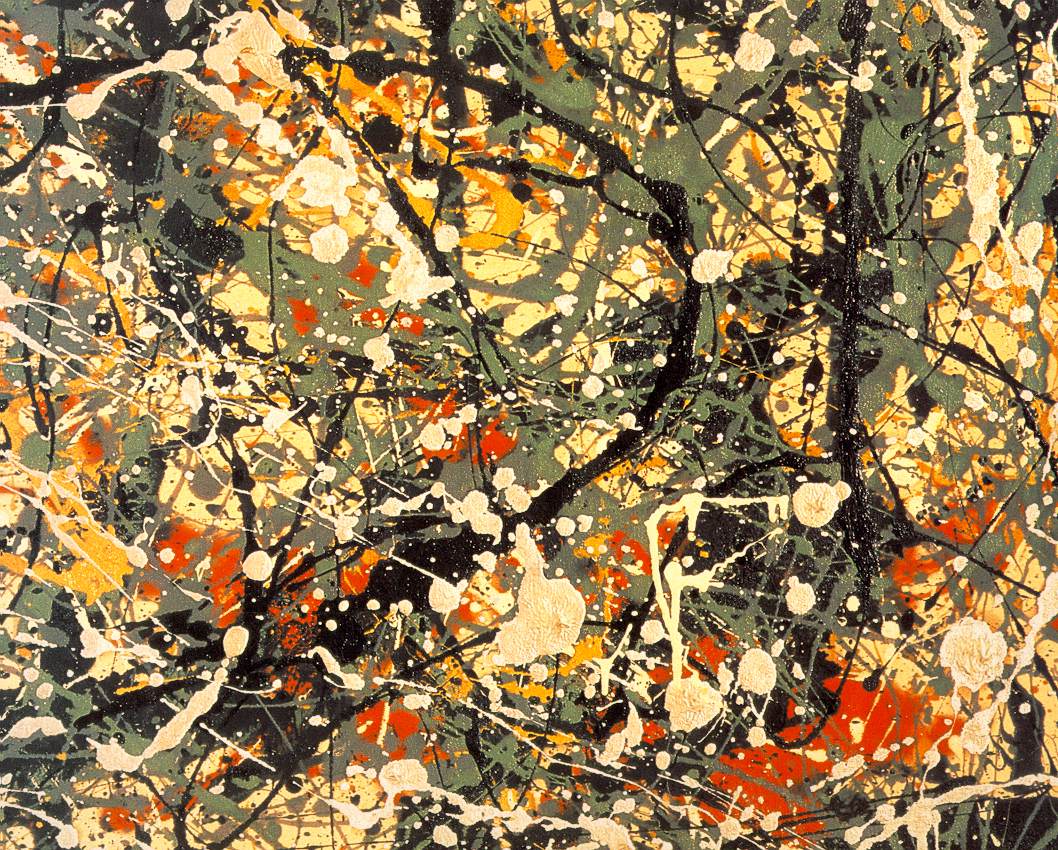
This metaphor is rooted in the understanding of the "arts" (of which I am not the most informed so hang with me).
My wife shares with me that Classical music has certain rules that composers had to follow. So if you were going to do one thing in the musical composition, then you were required to do something else. Certain harmonies are 'allowed' and others are not. This is in part why, I think, classical music will not have a chord that you hear in jazz music. Speaking of jazz, it operates the same way. If you are working under the rules of jazz, then you have to honor those rules of the art.
In the world of the visual arts, if you were painting in the modern age, then you also had rules that you followed. I am not sure what those rules are (thus my lack of knowledge in the arts), but you might be able to see these "rules" applied to impressionist art. These visual arts, when you were working under these different 'rules', had requirements that you obliged by and honored and everyone followed them.
I get this feeling when I see Pollock's art and think, "that is just paint dumped on a canvas, that is not art. I could do that!" My brain is viewing "art" as that which follows a set of rules (which I may not be able to define), and if it violates those rules then I declare it as "not art".
Post-modernism is that time that is upon us that come to the understanding that respects these different sets of "rules". It seems to suggest that we are now no longer limited in our scope of expression and understanding of the world. We now understand that all of these sets of "rules" that exist all have truth in them and no one set of rules has all the truth. There is no one painting that ends the need to have paintings. As great as Dylan was, even Bob Dylan did not end the need to create more music. He did not have exclusive and exhaustive access to music truth.
We live in a time that respects more sets of "rules" in such a way that we no longer require everyone to play by the same set of "rules" in order to paint, compose music or even create theology.
Post-modernism is the rule that respects all the rules.
(Which is why many post-moderns will argue with you when you do not respect all sets of rules.)

Be the change by Jason Valendy is licensed under a Creative Commons Attribution-NonCommercial-ShareAlike 3.0 Unported License.