
Reality takes a hit in the form of Rhubarb
There are many people who know the difference between a fruit and vegetable, but I am not one of them. So, according to the 'googles' the difference between a fruit and a vegetable is:
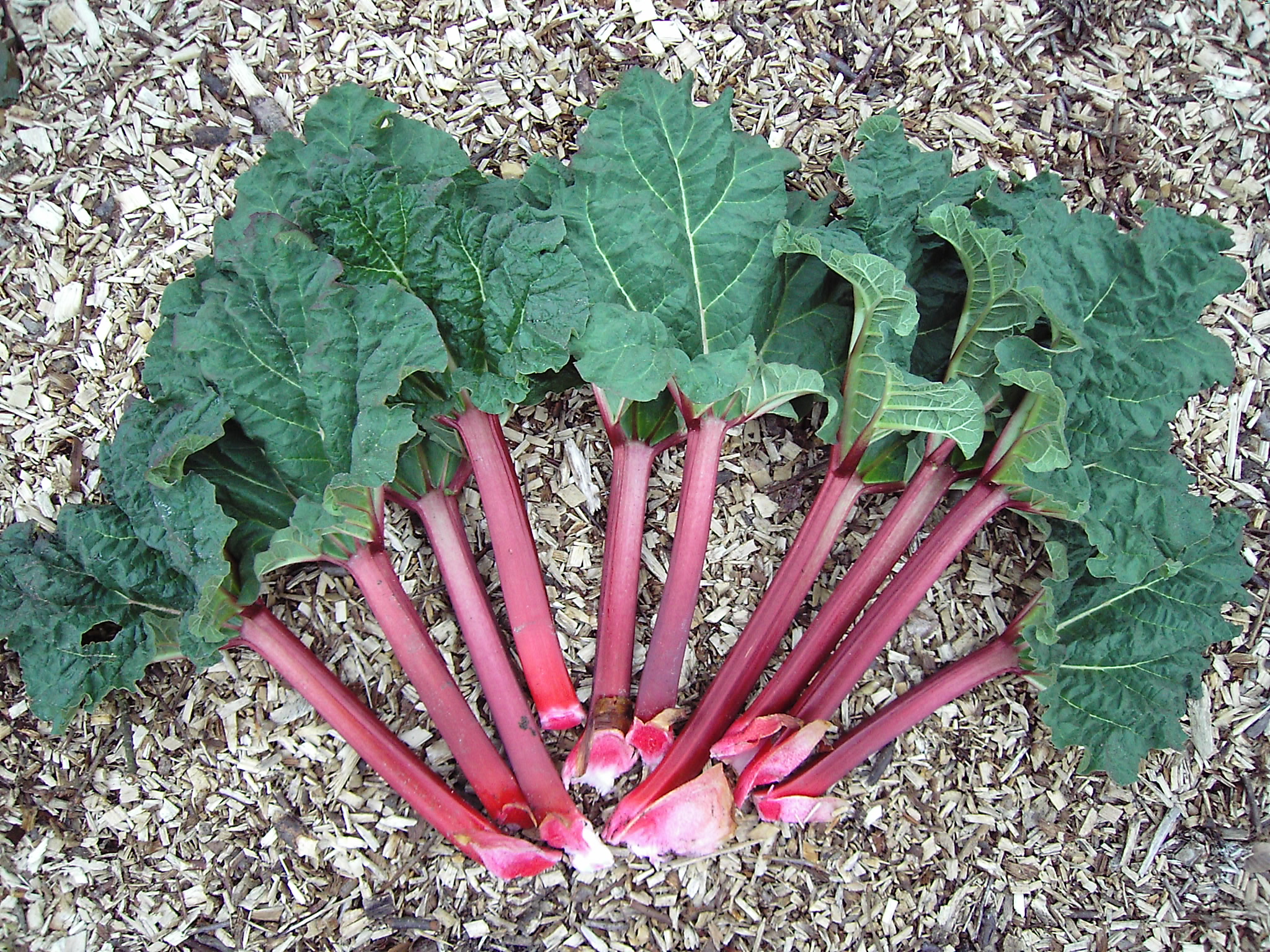 |
| Rhubarb (AKA - Threat to truth and reality) |
"A fruit is actually the sweet, ripened ovary or ovaries of a seed-bearing plant. A vegetable, in contrast, is an herbaceous plant cultivated for an edible part (seeds, roots, stems, leaves, bulbs, tubers, or nonsweet fruits). So, to be really nitpicky, a fruit could be a vegetable, but a vegetable could not be a fruit."
So that could not be clearer. There are things which are categorically a fruit and there are things that are categorically a vegetable. There are plants such as tomatoes, peppers, and peapods that seem to be vegetables by the way they are organized in the store but even these, by definition, are fruits (as weird as it sounds even to me).
Well, if rhubarb did not mess up enough with it getting into the "pie business", Rhubarb is on a tear again messing up reality as we know it!
According to the Wikipedia entry page:
"Rhubarb is usually considered to be a vegetable; however, in the United States, a New York court decided in 1947 that since it was used in the United States as a fruit it was to be counted as a fruit for the purposes of regulations and duties. A side effect was a reduction in taxes paid.[1]"
The jig is up Rhubarb! We live in a Black and White world in which reality is clearly defined! You cannot be scientifically classified as one thing and then because of cultural influences and social norms and economics and other non-scientific forces be defined as something else! You are either a vegetable or a fruit, there is no gray area on this. Pick a team. And don't play that "well-one-culture-says-I-am-a-fruit-and-other-cultures-define-me-as-a-vegetable-and-so-it-is-a-bit-relative" card. We can see right through that.
Because you see, rhubarb, if you are able to skirt definitions and highlight a relative aspect of reality then you could very well cause a cascading effect to reality.
And before you know it, we will live in world in which we cannot know the speed AND location of something at the same time or light can be both a wave AND a particle or that two particles even when separated by a great distance will begin to behave in the same way.
You see rhubarb, you are messing with reality here when you define universal definitions. So even if defy clear definition, for the love of all that is good, at least stay out of our pie.
Freakonomics and Church

In a continuing and lame effort to co-op the brilliance of others and put forth content that is psudo-original, here is another installment of my take of Freakonomics and Church.
There is a wonderful little book titled 30-Second Economics (which can be found on goodreads.com here) Near the end of the book, there is a little economic theory written about known as "The Tragedy of the Commons". Here is the explanation given:
Several herders graze theirs cows on common pasture. From each herder's point of view, it's rational to add more cows to his herd, because his profits will increase. However, every additional cow depletes the pasture's resources. If every farmer acts "rationaly" by adding more cows to his herd, the common land will eventually be overgrazed, grass will stop growing and all the herders will suffer. In essence, actions that are rational for the individual may be irrational for the group.(emphasis added)"
While it is easy to see how this tragedy is common among environmental situations, but how does the tragedy of the commons play out in the church? A few thoughts:
- Ministers: The UMC is a church that has ministers who are appointed to the congregation. So in essence, the ministers of the conference (a large geographical region) are shared by all the churches. While it is rational, good and logical from one congregation's point of view to have "minister A" it may very well not be rational, good or logical for the conference for that congregation to have "minister A" because there are other congregations that would better benefit from the resource of "minister A". As a United Methodist, I have bought into a system that places a greater importance on what is rational, good and logical for ALL churches not just a few.
- God's Grace: On the flip side, many Christians hold to an idea that God's grace is limited. While not using those words, the idea is expressed in a number of ways such as "Only these type of people are real Christians" or "You 'get saved' only after you accept Jesus by way of a prayer." The idea that God's grace is limited to a select, or the 'elect', is arguing that God's grace is limited. And if we think there is limited Grace then we are going to act differently than if we believe Grace is limitless and boundless and endless. When we believe Grace is limited then of course we will live in a such a way as try to get as much grace as possible and, just like the herders above, that is very logical and rational. However if Grace is thought of in these ways, then we also will indirectly restrict other's access to Grace because there is only so much (grass/Grace) to go around. So the question for the Church becomes - Do we hold to an idea that Grace is limited and thus fall victim to the "Tragedy of the Commons" in which we act rationally in self interest but ultimately to the demise of others? Or is Grace unlimited and we believe no matter how many cows there are there is always enough grass?
There are other applications to this economic theory, but these are just a couple of jump starts to consider.
The first dates on my calendar
TCU had an social workers appreciation dinner the night of Maundy Thursday. It is good to give thanks for the work of social workers, but I have to wonder why Texas CHRISTIAN University would schedule an event on such a sacred time of the Church year?
It could be argued that this particular dinner is always on the 3rd Sunday of April and this year it happen to be Maundy Thursday. Fair enough, it makes sense to me. But it also sparked a question.
Are the first dates we put on a new calendar a reflection of our priorities?
As a child my family functioned off of a family calendar that sat on the bar in our home. When January came around, my parents would get a new calendar for the family and begin to "seed" the calendar with important dates. Birthdays, anniversaries, vacations, graduations and (in my family) soccer and wrestling tournaments. These dates were what we then used to "build" the rest of the year around.
Perhaps for the Christian, the dates we seed our calendar with ought not be dates about us. Perhaps, we ought to put the calendar of the Church on our calendar before we being to consider when we are going on vacation? Perhaps we ought to live around God, rather than making God to live around us?
So the next time you find yourself "seeding" a calendar, take notice of what dates you put down first.
They might be your priorities.
.jpg)
It could be argued that this particular dinner is always on the 3rd Sunday of April and this year it happen to be Maundy Thursday. Fair enough, it makes sense to me. But it also sparked a question.
Are the first dates we put on a new calendar a reflection of our priorities?
As a child my family functioned off of a family calendar that sat on the bar in our home. When January came around, my parents would get a new calendar for the family and begin to "seed" the calendar with important dates. Birthdays, anniversaries, vacations, graduations and (in my family) soccer and wrestling tournaments. These dates were what we then used to "build" the rest of the year around.
Perhaps for the Christian, the dates we seed our calendar with ought not be dates about us. Perhaps, we ought to put the calendar of the Church on our calendar before we being to consider when we are going on vacation? Perhaps we ought to live around God, rather than making God to live around us?
So the next time you find yourself "seeding" a calendar, take notice of what dates you put down first.
They might be your priorities.

Be the change by Jason Valendy is licensed under a Creative Commons Attribution-NonCommercial-ShareAlike 3.0 Unported License.