

The means are the ends at #UMCGC
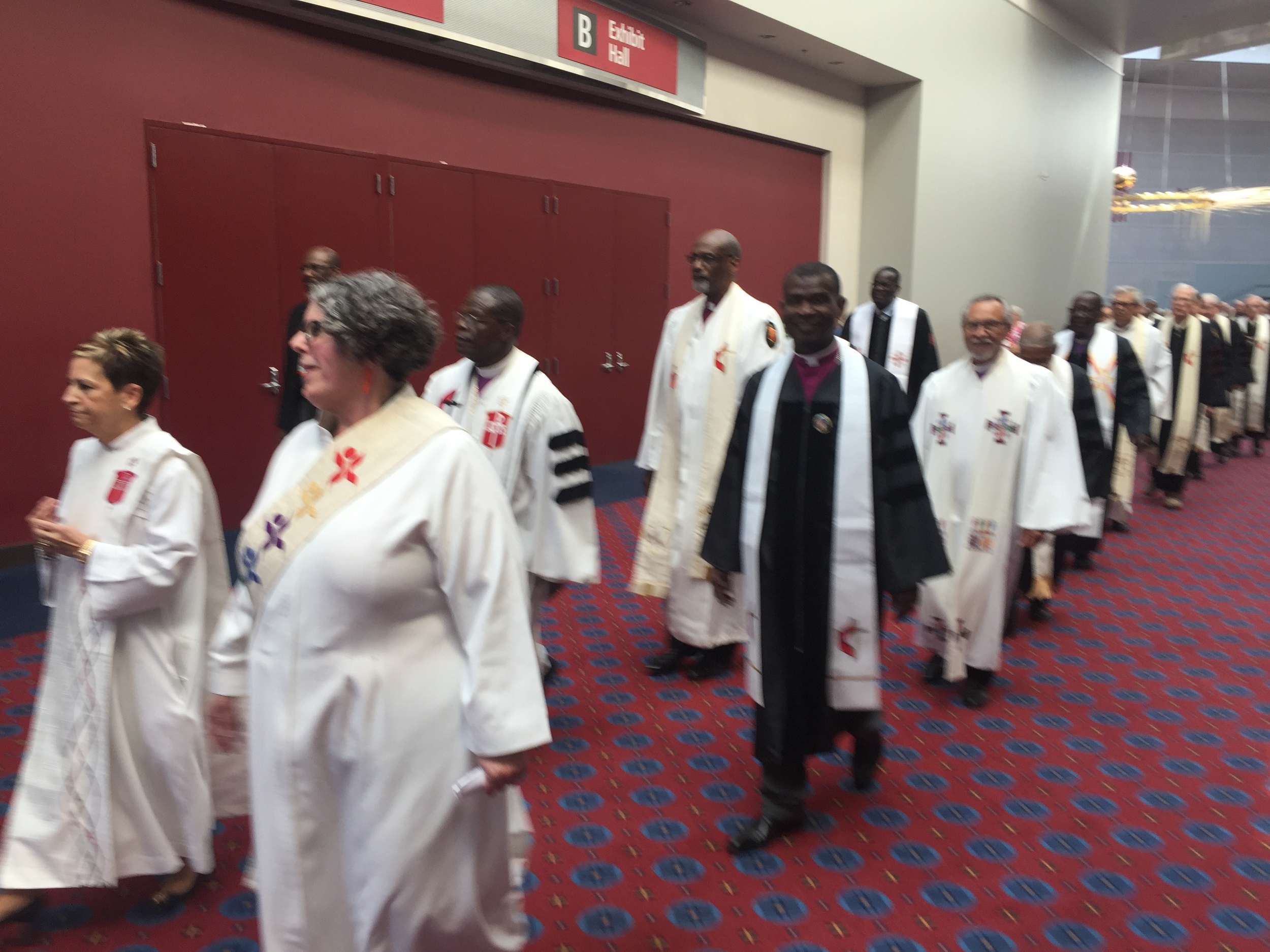
General Conference is a gathering of rules and a desire for order. It is one that votes in either/or. There are yes or no votes. There are few times when there are more than two options. It is a place that is ripe with opportunities for misunderstanding and misrepresentation. These are not malicious opportunities, it is just the way the General Conference is set up. Because it is a body that values accomplishing something, the focus is on “ends”.
When petitions come forward, there seems to be a level of suspicion of “what is the end game to this petition?” Because there is such distrust among the body, there is a cloud that hangs over the body that showers down doubt and even more mistrust. Rather than assuming petitions are submitted in good faith, the general conference body seems to assume that petitions are crafted to hide their true intentions which have a nefarious ends.
The reality is that one of the things that marks the Church from other organizations is that in the Church our means are the ends. Other organizations places priority on the ends, what is accomplished, what is completed, what is the bottom line. There are ethical boundaries that guide many in the business world, however “at the end of the day” there is a desire to meet the goal, achieve the goal, arrive at a place, and meet the projections.
The reality is that the Church is one that proclaims that God came in Jesus Christ. To put it another way, Christianity is one that affirms that the means are the ends. How God does what God does is what God does. How we do what we do is what we do. Few will know much of the decisions that are made, but what will be remembered is the actions that are taken. The means we take is the end that people will “know” about the Church.
We can say all that we want that we are a loving people and desire for reconciliation. However nice our creeds are, it is our actions that are branded in the minds of the world. Christianity is seen as a hypocritical and “anti” organization by many outside the church.
When we confuse the ends as primary, we will take any means to achieve them. Let us not forget that our means are the end.
How to Prevail at the #UMCGC
Genesis 32 tells of a story where a man named Jacob wrestles with one often understood to be God. In the middle of the story this exchange happens:

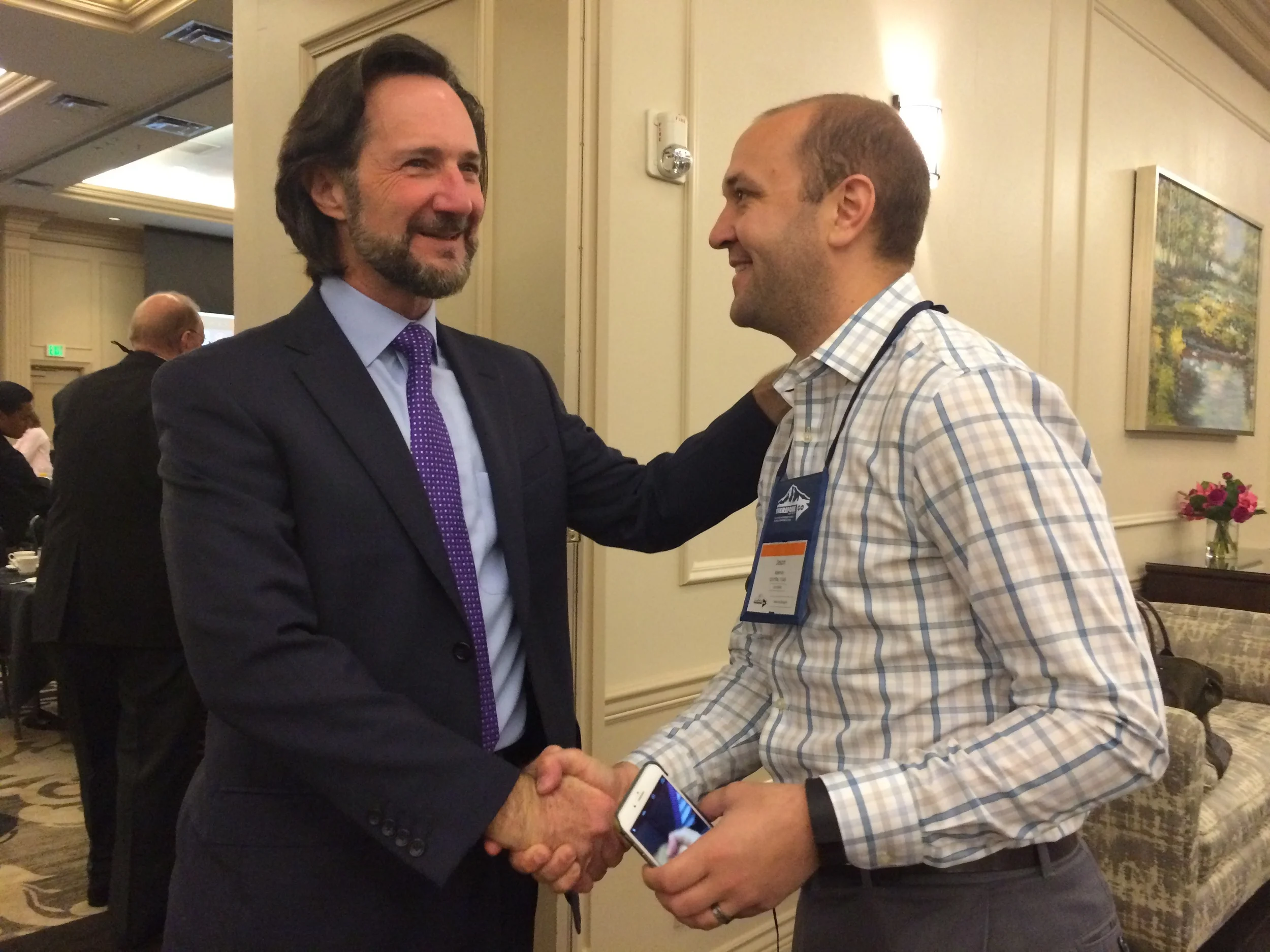
The prevailing is in the wrestling. Rev. Rob Renfroe and Rev. Jason Valendy.
But Jacob said, ‘I will not let you go, unless you bless me.’ So he said to him, ‘What is your name?’ And he said, ‘Jacob.’ Then the man said, ‘You shall no longer be called Jacob, but Israel, for you have striven with God and with humans, and have prevailed.’
What is interesting is that when Jacob/Israel wrestles with God, it is Jacob who prevails. We sometimes think of this as like a WWF match, where one person prevails and gets to walk away with the championship belt while the other is a looser. However, how is it possible for anyone who has wrestled with God to loose? How could anyone who has ever come face to face with the God of life ever loose?
It is the very act of wrestling with God and with man that one prevails. It is the one who does not wrestle who does not prevail.
It is this story that I would submit to the General Conference of the UMC. To think in terms of which side prevails and which side does not prevail misses the point. It is the act of wrestling that we do in these days that we all prevail. If we decide to split and fracture, we refuse to wrestle.

The #UMCGC of "Go" Misses the Church of "Be"?

The emphasis/theme of General Conference is on of "Therefor Go". Sermons and rallying cries are around the standard of "Go". It is a big tent theme where all sorts of people are getting behind. There is a strong sense that the UMC is at her best when we "Go" into the world to make disciples of Christ for the transformation of the world. That is a noble goal and theme. I wonder, with so much focus to "Go" are we overlooking "Be"?
It is great to have social action, but action without contemplation (a Richard Rohr major theme) we are missing the point. Perhaps it is worth allowing the good Father to share in his own words from May 13, 2016 devotion:
I used to think that most of us must begin with contemplation or a unitive encounter with God and are then led through that experience to awareness of the suffering of the world and to solidarity with that suffering in some form of action. I do think that's true for many people, but as I read the biblical prophets and observe Jesus' life, I think it also happens in reverse: first action, and then needed contemplation.
No life is immune from suffering. When we are in solidarity with pain, injustice, war, oppression, colonization--the list goes on and on--we face immense pressure to despair, to become angry or dismissive. When reality is split dualistically between good and bad, right and wrong, we too are torn apart. Yet when we are broken, we are most open to contemplation, or non-dual thinking. We are desperate to resolve our own terror, anger, and disillusionment, and so we allow ourselves to be led into the silence that holds everything together in wholeness.
The contemplative, non-dual mind is not saying, "Everything is beautiful," even when it's not. However, you do come to "Everything is still beautiful" by facing the conflicts between how reality is and how you wish it could be. In other words, you have to begin--and most people do in their adult years--with dualistic problems. You've got to name good and evil and differentiate between right and wrong. You can't be naive about evil. But if you stay focused on this duality, you'll go crazy! You'll become an unlovable, judgmental, dismissive person. I've witnessed this pattern in myself. You must eventually find a bigger field, a wider frame, which we call non-dual thinking.
Beginning with dualistic action and moving toward contemplation seems to be the more common path in the modern era. We see this pattern in Dorothy Day, Thomas Merton, Martin Luther King, Jr., Mother Teresa, and Jean Vanier. These people entered into the pain of society and had to go to God to find rest for their soul, because their soul was so torn by the broken, split nature of almost everything, including themselves.
As we focus on being a church of "Go", that is important. However, if the "Go" is not moving us into contemplation then we will be nothing but a glorified social action group that carries the name of the United Methodist Church.

Be the change by Jason Valendy is licensed under a Creative Commons Attribution-NonCommercial-ShareAlike 3.0 Unported License.