

My kid punched a kid, so I punched him to teach him a lesson
I have brown eyes but my wife has blue eyes. I have brown hair but Estee has blonde. I have fine hair but Estee has full hair. I have oily skin but Estee is has normal skin. When you look at our boys you can see each of their parents in their body.
One has blue eyes, blonde hair, oily skin and full hair. The other has blue eyes, brown hair, normal skin and fine hair. There is a residue of each of their parents in their lives.
This is how DNA works.
While we know this about biology, this is also true about psychology. I was raised in a home with a mother who is a "hugger" and a father who highly values commitment. I am a mix of these two things. There are times I catch myself acting exactly like like my mother or father. The circumstances in my past are present in the present.

When we create something, be it a child, artwork or even a society, there is a residue of the creator(s) in the created. When a child grows up in an environment that deals with anger by being abusive toward women, chances are that child will not know how to deal with anger other than to abuse women. The residue of the ones who help create that child will be present in that child throughout life.
It is important to remember when we create solutions to problems, even problems of violence, we need to be very aware of the ways we create the solution. The things that go into that solution will be present in that solution. If we use chocolate chips in a batter and expect that after all the ingredients go into the oven that they chocolate will some how be absent in the cookie, we are fools. If we use violence to solve a problem and expect violence to some how be absent in the future, we are fools.
I do not know the way forward in dealing with violence. I do know that if we use violence then we will only create solutions that in turn will have the seeds of violence within it. If we want to eradicate violence, let us begin with eradicating violence in the solutions we create.

Just a reminder, it is Sin. Not sins.
"Have the men of our time still a feeling of the meaning of sin? Do they, and @@do we, still realize that sin does not mean an immoral act@@, that "sin" should never be used in the plural, and that not our sins, but rather our sin is the great, all-pervading problem of our life? Do we still know that it is arrogant and erroneous to divide men by calling some "sinners" and others "righteous"? For by way of such a division, we can usually discover that we ourselves do not quite belong to the "sinners", since we have avoided heavy sins, have made some progress in the control of this or that sin, and have been even humble enough not to call ourselves "righteous". Are we still able to realize that this kind of thinking and feeling about sin is far removed from what the great religious tradition, both within and outside the Bible, has meant when it speaks of sin?"

"I should like to suggest another word to you, not as a substitute for the word "sin", but as a useful clue in the interpretation of the word "sin", "separation" . Separation is an aspect of the experience of everyone. Perhaps the word "sin" has the same root as the word "asunder". In any case, sin is separation. To be in the state of sin is to be in the state of separation. And separation is threefold: there is separation among individual lives, separation of a man from himself, and separation of all men from the Ground of Being. This three-fold separation constitutes the state of everything that exists; it is a universal fact; it is the fate of every life. And it is our human fate in a very special sense. For we as men know that we are separated. We not only suffer with all other creatures because of the self-destructive consequences of our separation, but also know why we suffer. We know that we are estranged from something to which we really belong, and with which we should be united. We know that the fate of separation is not merely a natural event like a flash of sudden lightning, but that it is an experience in which we actively participate, in which our whole personality is involved, and that, as fate, it is also guilt. Separation which is fate and guilt constitutes the meaning of the word "sin". It is this which is the state of our entire existence, from its very beginning to its very end. Such separation is prepared in the mother's womb, and before that time, in every preceding generation. It is manifest in the special actions of our conscious life. It reaches beyond our graves into all the succeeding generations. It is our existence itself. Existence is separation! Before sin is an act, it is a state."
The Shaking of the Foundations by Paul Tillich - Chapter 19: You Are Accepted

Preach from scars not wounds
So far in 2015 there have been 353 mass shootings in the United States (see Mass Shooting Tracker). That about 1.05 mass shootings per day.
This Sunday, many preachers are going to feel compelled to address the shootings this past week in California and Georgia. Many directly addressed the shootings in Paris a few weeks ago. And, assuming this mass shooting thing is not going away, many more preachers may feel compelled to address future tragedies.
If there is one thing that I have learned as a preacher and communicator of the Gospel it is the value and necessity to preach from our scars and not wounds.
Wounds are open and still healing. They are fresh and raw. They may still be bleeding and often put a person in a situation where they may be in shock or irrational. It is not the time to preach the message of Christ because you, as the preacher, are not in a good place to receive the Holy Spirit. The pain of the wound can be so overpowering that the preacher's own voice becomes the dominate voice in the sermon rather than the voice of the Holy Spirit. If you are a preacher and you are preaching from your wounds, you may be doing more harm than Good.
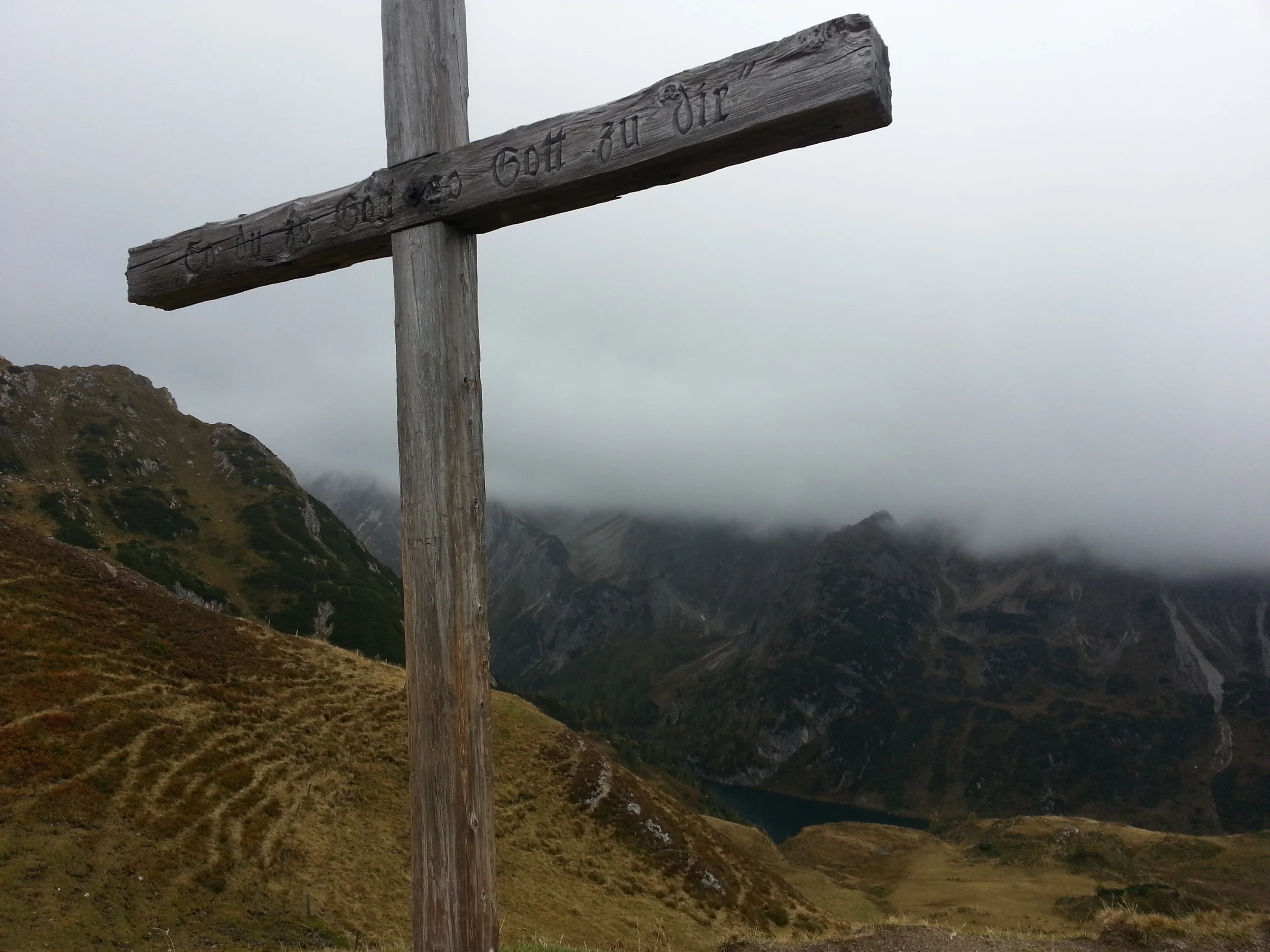
But more than that, feeling like we need to preach from the raw wounds also may be an expression of a lack of faith. Lack of faith that there will be more or better time to address these hurts. When Jesus was on the cross and wounded, he did not at that time talk about the resurrection or the power of the work of God. He cried out. He bled. He died. He did not teach or proclaim. He trusted that there would be a more and a better time to address the injustices of the moment.
Which is why, in part, when Christ appeared to the disciples he showed them his scars. He was able then to address the problems and the pain of the world, but only after the bleeding stopped. This was the more and better time to teach the disciples about how to live in light of death and resurrection.
Preaching from our scars and not our wounds is not limited to preachers but all interpersonal relationships. When you find yourself wounded it is very difficult to help usher in reconciliation. Tend to the wounds and when there is a scar that protects the wound, then speak to the hurt.

Be the change by Jason Valendy is licensed under a Creative Commons Attribution-NonCommercial-ShareAlike 3.0 Unported License.