

Everything happens. Sometimes there is a reason.

You have heard it, "Things happen for a reason."
For many this mantra is hopeful because it gives a sense of security that no matter what crap they are living with right now, there is meaning behind it. That suffering is not without purpose. This can reassure us when we feel like we are alone and broken and hopeless. If we can only believe that things happen for a reason then it dulls the pain a bit and gives us breath for another day. I do not discount the comfort this provides people in time of need.
But it does not provide comfort for me at all.
It can be argued that if things happen for a reason than ultimately that reason is God. It is God that caused the tsunami. It is God that gave the cancer. It is God that was behind genocides and wars. When I hear "everything happens for a reason" my mind jumps to the question, "why would God not only allow but even cause this amount of suffering?"
I do not believe that everything happens for a reason. I do not believe that God causes, green lights or approves of the suffering in the world.
Rather than causing the suffering, I believe God is present with us through the suffering like a friend. Rather than trying to teach a lesson of how strong God has made you ("God will not give you more than you can handle") or get you to be more faithful ("God brought you to it and God will bring you through it."), I believe God weeps and struggles with us.
As Rev. William Sloane Coffin said at his son's funeral ten days after he died in a car accident, God provides minimum protection and maximum support.
Here is what I know. Everything happens. Sometimes there is a reason, sometimes there is not a reason. Either way, God is present with you.
And that brings me more comfort than thinking that everything happens for a reason.
Napa, Mars Rover and the UMC
I never thought my first personal experience with Napa California would be by calling a United Methodist pastor, but the phone was ringing and I was a bit nervous. I am also sure that Rev. Lee Neish had no clue what to make of it when he saw an unidentified number pop up on his cell phone with the location "Saginaw, Texas", but he answered.
The course of the conversation moved from earthquakes, the hospitality of Seventh Day Adventist, ministry in California, Texas flooding and the Mars rover. You know just typical clergy meeting for the first time sort of conversation.
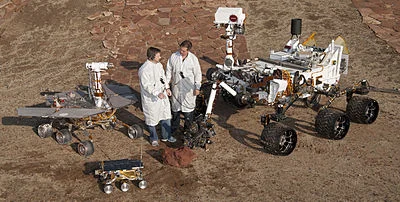
Rev. Neish shared a metaphor for his hope for the UMC as a church that is like the Mars rover.
He went on to say that the engineers did not know what sort of terrain the rover would encounter and so there was much talk about the different ways to design the wheels. The two axle and four wheel design was quickly ruled out because it was too unstable for an unknown terrain. Discarding wheels all together and using a track system like on a bulldozer was found to be inadequate since there would be no way to reset the track if it slipped off.
As you can see in the above picture, they agreed on an independent axle system each with a single wheel. These six wheels were all able to move the rover forward to complete the mission even if several of the individual wheels were unable to move for some reason.
The United Methodist Church is facing a series of decisions around homosexuality, biblical authority, role of the support agencies, function of the bishop and what it means to be an poly-context denomination. Many have been thinking about these decisions and seem to be influenced by the metaphor of a two axle four wheel vehicle which needs all four wheels moving in order to be effective. Others are thinking of the denomination as like having two tracks, liberal on one side and conservative on the other. The idea that we can only move forward if we split and everyone have their own track.
What the Mars rover metaphor offers is an alternative to these dominate ways of thinking. What if we approached the above problems and other unforeseen terrain, with the metaphor of independent structures that are bound together by mission and less by doctrine.
Is it possible to consider a denomination that can still continue in the mission even if some of the wheels are unable to move?

Spirituality of Cake

The old joke is that some people love cake so much it was among the reasons they get married. Regardless of how you feel about cake, there is a spirituality of cake that many times is overlooked.
If you see a pie or a plate of cookies you don't usually think there must be a celebratory reason for their presence. But cake is different. If you see a cake and don't know why it is there, you will wonder if you missed an memo or perhaps wonder if you are about to be the victim of a surprise party. Because cake = party.
We seem to know that cake always points to something else every time we see a cake, but we quickly forget this fact when the cake is cut and served. Many times, for good reasons, we pass on cake. We just ate, we are watching our calories, we have a food allergy, we are not big on chocolate or fondant. For one reason or another, we pass on the cake.
Then it happens: the celebration which the cake was pointing us toward, is now split. There are those who are participating and sharing in the celebration and then there are others who are, in some small way, not.
The spirituality of cake is one of connection. It is one of being a part of the whole and sharing in the goodness of the moment. It is a physical gift, a metaphor for life's sweetness, an extension of relationships.
So regardless of how you feel about cake. Take the cake. You don't have to eat the whole thing. Take the cake, because what they are handing you is more than cake. Take the cake and be a full participant in the moment that is truly a gift.

Be the change by Jason Valendy is licensed under a Creative Commons Attribution-NonCommercial-ShareAlike 3.0 Unported License.