
Reasons why young people seeking old ways of church - commentary
The other day this post, 5 Reasons Why Young People Are Seeking Old Ways of Doing Church. While it is a broad brushstroke, as most blog posts are (including my own), it embodies something for me that has rang true for my experience and those I hang with.
The original post's reasons are:
- Authenticity
- Rootedness
- Mystery
- Icon and Symbolism
- Participation
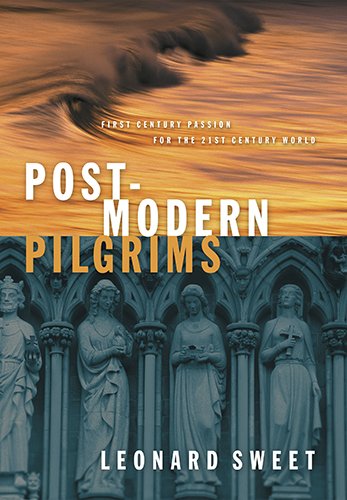
Rev. Dr. Leonard Sweet has argued for a long time that we are living in E.P.I.C times (Experiential, Participatory, Image Rich and Connected). As you may be able to see the five reasons above and EPIC are overlapping one another. In rough terms:
- Authenticity and Mystery as Experiential
- Participation as Participation
- Icon/Symbolism as Image Rich
- Rootedness as Connected
I can make a case that the church I serve is a church that is an amalgamation of these trends all in one place. But my situation is not unique. The interesting twist is that many mainline churches are slow to change and many can make the case that their church is also an amalgamation of these trends.
The point being that individual churches do not need to feel like they have to change and adapt to the novel if that is not who/what God is calling them to do/be. Being authentic and who you really are is more important to a person my age (and maybe any age) than being something you are not just to try to attract the "young people".

Religion Bounces Back in the Age of Novelty?
Alain De Botton's book points out that religion have at their core a sense of repetition. Be it annual feast days, repetition of the same story, recreating a previous event or common rote prayers, patterns abound in religion. In part the reason for all this repetition is due to a commonly held belief among religious types - human beings are forgetful.
This repetitive nature of religion can contribute to the feeling that religion is boring. As my high school english teacher, Mr. Ott, often quoted the Russian quip, "Repetition is the mother of learning and the father of boredom." In an effort to not be boring but instead to be fresh and new and exciting, many Christian churches have adopted a "TED" style of worship: Keep it novel every time.
There is a fear among the Christian leaders that I know that if we are not sharing something each week that is new or groundbreaking or at least something that someone did not know before then we are failing. This pressure leads to some seriously cheesy sermon series all in an attempt to be novel.

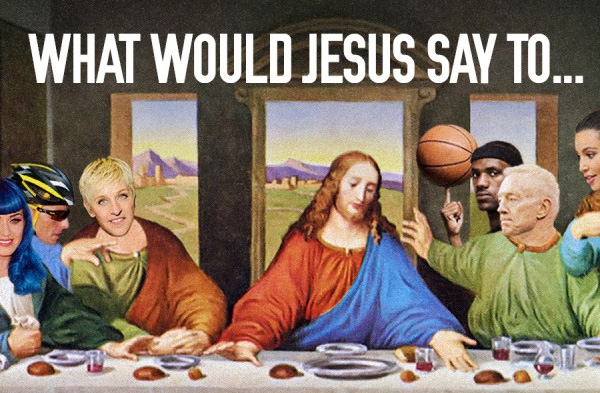

However I wonder if it is possible that because we are in an age of novelty that religion will see more people interested in it. As the non-fig based cookie man, Newton said, "Every action has an opposite and equal reaction."
We are constantly hammered with the "new" and the "latest" and the "breaking" the "update" that we become overwhelmed by all that we don't know. My list of books that I want to read grows four times as fast as the list of books that I have read. To which Botton states:
"We feel guilty for all that we have not yet read, but overlook how much better read we already are than Augustine or Dante, thereby ignoring that our problem lies squarely with our manner of absorption rather than with the extent of our consumption."
Part of the beauty of religion is that if forces us to return to the same stories and messages and ideas time and time again. Christianity forces me every year to ask the question, "What the hell is happening on that cross?" and "If you cannot believe that there is a divine spark in Jesus then how will you ever believe that there is divinity in you?"
Just as the new minimalism may be a reaction to the overconsumption that defined the baby boomers, so too could religion's repetition be a reaction to the Age of Novelty?
The Thing Most Preachers Say Every Week
Just like there are different makes of cars, there are different philosophies of preaching. There are some who pride themselves on being pastoral, ensuring people are lifted up. There are others who are fiery and prophetic, trying to spur people to action. There are others who see the preaching moment as a sort of group counselling, helping people to cope with the problems of the day.
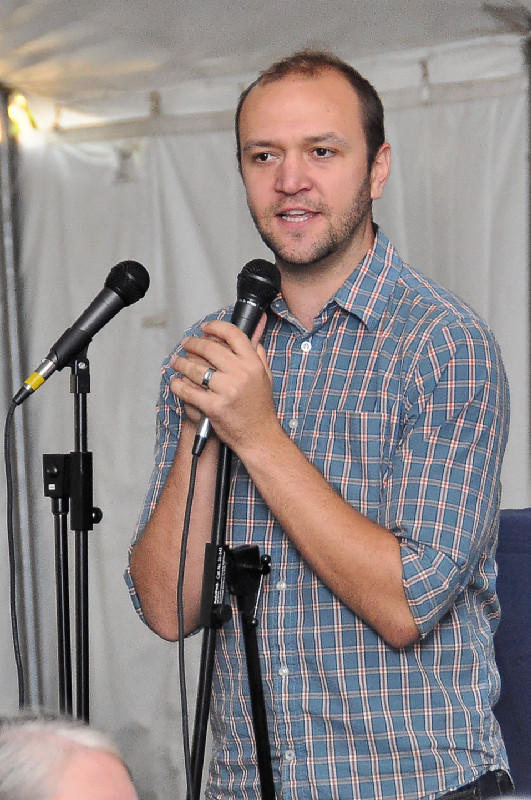
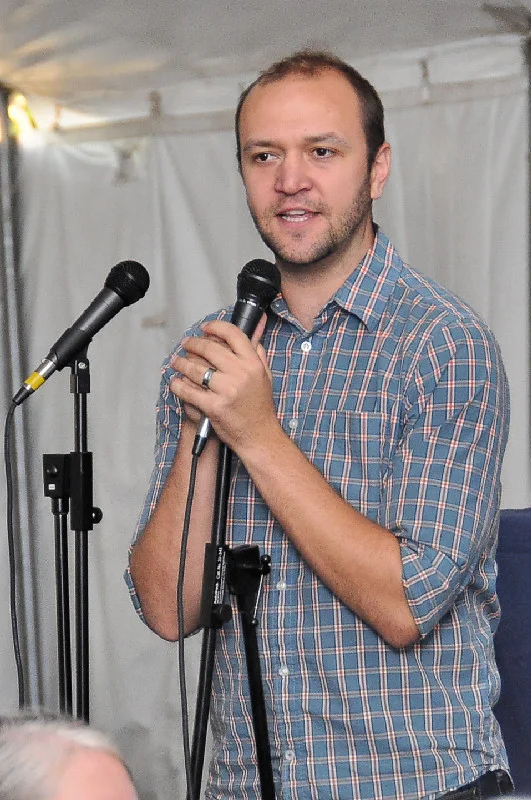
Sometimes preachers will look like a standup comic in order to say things you don't want to hear.
And just like there are different models of cars, there are different styles of preaching. Some are storytellers and some are didactic teachers. Some are dramatic re-enactors, while others stand as one who is giving a TED Talk.
Regardless of the philosophy of the style there is one thing that most preachers say every week and to not say it would lead to a short ministry at that place:
Most preachers, most of the time can only say the thing that people want to hear.
That is to say most of time preachers cannot say the thing that people disagree with. Of course preachers say things all the time that people disagree with, but if that preacher has also been at that setting for a long time, it is in part because that preacher most of the time says the things the people want to hear. One can see why Jesus, and many other spiritual teachers, are driven from their hometown or an area after a while of preaching/teaching things that people don't want to hear.
I have heard it said that people want to be challenged by the preacher each week. I have heard it said that people want to learn something each week. These may all be true. However, if the preacher challenges too much or challenges too strongly held convictions or if the preacher teaches something that contradicts core values - you can be sure most people will not put up with it for too long. They will leave. They will find a new church. They will split and start a new church. They will not attend church.
You just don't hear a preacher very often say things like:
- I don't believe this or that.
- There is no way this is factually true.
- Some Sundays, and other days, I think what I am saying is BS.
- Many times I doubt this whole resurrection thing and wonder if there is nothing more.
- I fear death or purposelessness or being alone or being forgotten or ....
- Some of the things the Universal Church does is garbage.
I have wanted to say some things like those above, but rarely have the courage to do so in the pulpit. Because I know that for the most part my job as a preacher is not to challenge but to reassure that what we say we believe is true.
If you find a preacher who on Easter Sunday proclaimed, "Yea, I just really have a hard time that death does not have the final word." Let me know.

Be the change by Jason Valendy is licensed under a Creative Commons Attribution-NonCommercial-ShareAlike 3.0 Unported License.