
Redeeming the walls that divide us
Simone Weil, a French thinker and Christian mystic from the first half of the 20th century is someone I am slowly beginning to become aware of. In fact recently I quoted her as a him, which exposed I did not do the basic of research on a her and (perhaps even more damning) gender bias. With this public confession out of the way, I pass along what came to my inbox from Inward/Outward not long ago:
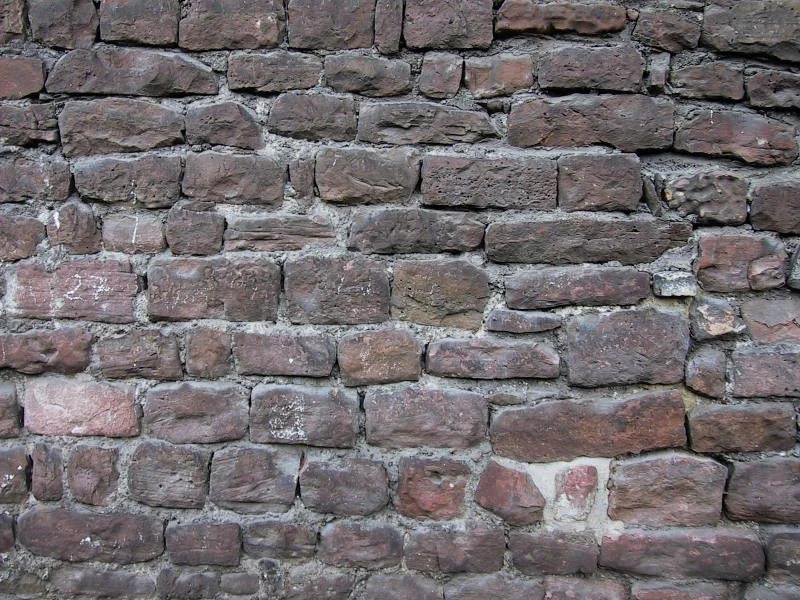
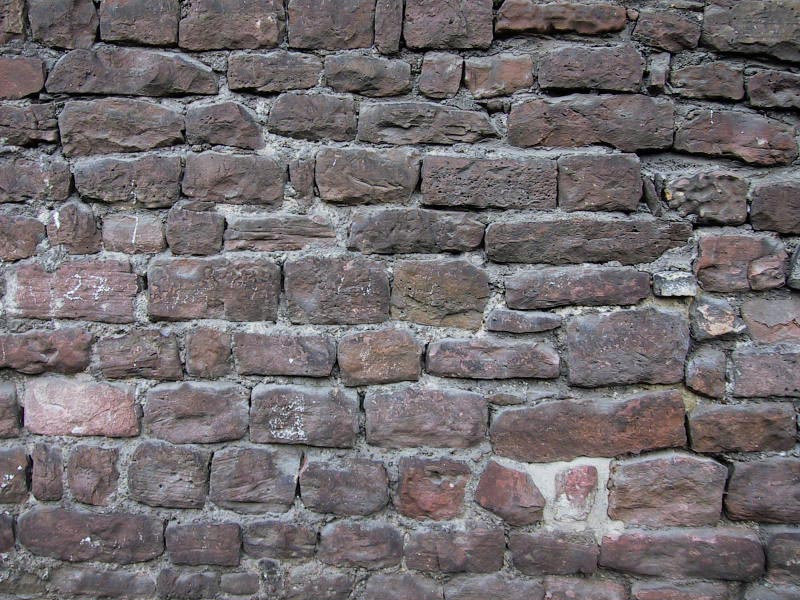
"Two prisoners whose cells adjoin communicate with each other by knocking on the wall. The wall is the thing which separates them but is also their means of communication. It is the same with us and God. Every separation is a link."
It makes me wonder if the Christian message has something to say about the boundaries that separate us. Could those boundaries not only be the source of division but also the source of unity?
Could we use that which divides us to unify us then rather than chunking rocks at the wall to break it or over the wall to harm our neighbor? Is it possible to use the points of difference at an invitation to meet up with others and get to know more about why they feel, believe, think or act the way they do?
I do not agree with everyone, even those close to me, and when I think about the things that divide us are trivial to the amount of love and respect we have fostered over the years.
Relationships have the power to overcome the divisions, and the divisions that can be used to build the relationships. This is how Christians understand redemption. God using the point point of weakness to bring about strenght.

Hope without a future (tense)

Biblical hebrew does not have a future tense. It is my very basic (and overly simplifying) understanding that it breaks verbs into two categories - that which has been done and that which is undone. Thus, Biblical Hebrew had only the past and present tense.
You may be thinking, how can that be? Did not the ancient Hebrews long for a future messiah? How could they have a hope without a future tense?
You can have hope with a future tense because, according to the Hebrews and thus religion of Jesus, because God is faithful. Because God had acted, God will act. Because God had brought people out of slavery, God will do so again. Because God brought people back from exile, so God will do that again.
The idea of having hope is an expression of faith. Not faith that one day God will work on it, but that God is working on it right now. In the present.
God is working right now, because God has worked in the past. And if God is working in the present, then I have hope today.
The morbidness of Rudolph the Red Nosed Reindeer - Revealing systems of sin
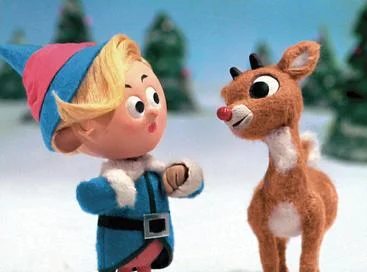
The more that I reflect on this little song the more it is clear to me how it functions like a short understanding of Rene Girard's theory of Mimetic desire and sacred violence. Take a look at each section of the song:
Rudolph the Red-Nosed Reindeer had a very shiny nose. And if you ever saw it you would even say it glows. All of the other reindeer, used to laugh and call him names. They never let poor Rudolph join in any reindeer games.

Notice that Rudolph is identified by what makes him different and odd. Just like any scapegoat is a deemed odd by the group. Also notice the power of the mob and how the mob seeks to justify its action - if you ever saw how weird this guy was you too would do what the group would do. The oddity of the victim makes him the butt of jokes and further ostracizing. Additionally the victim is never allowed to be a part of the "normal" group/mob's games. This sets Rudolf up as a ready scapegoat when a need arises.
Then there is a crisis, or a scandal:
Then one foggy Christmas Eve, Santa came to say, "Rudolph, with your nose so bright, Won't you guide my sleigh tonight?"
With any crisis, the community needs resolution or, as Girard says, "the social fabric will burst". So the mob uses a scapegoat to ease the crisis. In this case, the crisis is set and so they put Rudolph in the lead position, so that if anything goes wrong, we can all blame Rudolph and his obvious inability to lead or be a contributing member of the community. Also it is worth noting that our imaginations have several reindeer pulling the sleigh, the song can also suggest that there is only one reindeer pulling the sleigh, and in the time of great crisis and most danger the one selected is the "odd one" who will not be missed if unsuccessful.
With little choice, Rudolph leads the sleigh and we hold our breath to see if the would be scapegoat dies or lives. The next part of the song is a little fuzzy on it's timeline:
Then all the reindeer loved him, as they shouted out with glee! Rudolph the red-nose Reindeer, you'll go down in history!
This line is often understood as "the end" of the story, after Santa's delivery on the sligh. But it could just as easily be read as before the foggy night delivery. As soon as the scapegoat is selected, there are shouts of great joy. And when the scapegoat is selected, the community begins to further justify the decision to scapegoat the victim - there is a promise that the scapegoat will "go down in history". Tales will be told of all the "Great Rudolph" and how he was able to quell the crisis. This happens with Presidents of the U.S.A as well. No matter what the approval rating of the president in the moment, once out of office many people have a idealized memory of them (Regan, Bush, Clinton, etc.).
Truth be told, we do not know the fate of Rudolph. Did he succeed in guiding the sleigh? We don't know from the song. The only thing we do know is that since Rudolph's time there has never been another foggy night/crisis on Christmas Eve again. And because Rudolph brought about the end of all future foggy night/crisis, Rudolph is recalled as the greatest reindeer of all. As the beginning of this morbid tale suggests:
You know Dasher and Dancer and Prancer and Vixen; Comet and Cupid and Donder and Blitzen, but do you recall the most famous reindeer of all?
I am not trying to be a downer this season. And I could totally be way wrong on this interpretation. The reason I point this all out is to highlight that it is very easy to whitewash a story that could be very tragic and make it seem like the mob was in the right the whole time. The Gospels make it clear that the mob is actually the one that is constantly wrong.
This is what makes, in part, the Gospels different from other myths, legends, tales and fables.

Be the change by Jason Valendy is licensed under a Creative Commons Attribution-NonCommercial-ShareAlike 3.0 Unported License.