

Is the “Good News” news?

It has been said that what makes something newsworthy is if the story is abnormal. When someone is killed by another person, then it is newsworthy. It goes against the social contract, laws, and collective ethics when someone kills someone. This may be why we find it newsworthy when an animal escapes from a zoo. The accepted norm is that captive animals will remain captive in the zoo and when they are outside the zoo then it is not “abnormal”. This may also be why there is so little news about the good that is happening all around us. It is not abnormal for someone to treat another person with kindness. Most actions of “Good Samaritans” do not cut against the social grain.
When we talk about the Gospel of Jesus Christ, we talk about it being Good News. There are debates about what is so good about this news or if it is “good” at all. But I want to ask my Christian sisters and brothers, is the “Good News” actually news to anyone?
When we distill the Gospel of Christ down to a series of ethical codes that teach us how to be “Good Samaritans” then we are missing the point of the “news” part of the “Good News”. Treating each other with kindness is not abnormal. It is written in every ethical document that exists. The golden rule is called the golden rule not only for its ethical value but also for its universal appeal.
Perhaps one of the reasons that many people are apathetic to the Christian religion is because we have taken the “Good News” and, in our efforts to make it feel more “normal” to the masses, have removed the news out of the story. Now we have things like “The Greatest Story Ever Told” and “The Message”.
Which all sounds good.
But it is it news?
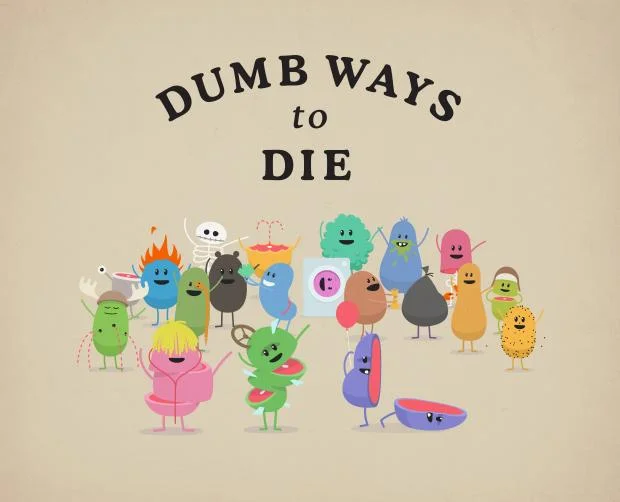
What the UMC needs to die to? Growth
There is a story in the Gospel of John in which Jesus tells
a couple of his disciples that unless a grain of wheat falls dies it will never
bear fruit. Only when we die is there a hope for new life. Life comes through
death. A paradox to be sure, but it is not paradoxical in how we in the UMC
teach it.
Most seeds in the world don’t produce fruit. Many plants don’t grow because the seed never took root, and those seeds just die. Many plants do not make it to the stage of maturing due to being stomped on destroyed in various way. Many plants do not grow to maturation because of poor light or lack of water. Many of the plants that grow well are still subject to being uprooted by strong winds, floods and fires. Then there are the countless plants that are never pollinated and so fruit is never produced by no fault of their own. Of the plants that manage to survive to produce fruit, many of those seeds are often eaten by beasts, birds and humans. There really are just a small percentage of seeds that grow, produce fruit and then those seeds produce fruit.
The odds of a single seed surviving, producing and procreating are just staggering to think about. Most of the seeds in the world just die.

In the UMC we are blind to these truths of nature. We assume that all seeds will eventually produce fruit. And if they are not, then there is something wrong. The pastor is poor. The congregation is not active. The building is too expensive. Staff is inept or the history is too painful. Whatever the reason - there is always a reason as to why a church is not growing and producing fruit. So we attend training and seminars, we listen to our leaders teach us best practices. And we seek out young people to give us energy. All in an effort to shore up the myth that all seeds eventually produce fruit.
Jesus may be saying to us today is that we need to die to the growth mentality. Stop looking for ways to grow. Stop assuming all seed grows and produces. Stop worrying why some places die and why some places thrive. Stop trying to control ever variable in the church growth equation and stop thinking about growth all together. Only a small number of seeds grow.
Rather than focusing on growth or putting hope in the idea that eventually all seeds grow, should we be focusing on how to change our lives to reflect a Christ who put his faith in a cross. To put it another way, should we be more focused on dying than on living?
I am not sure that Jesus knew he would be resurrected from the dead. I cannot imagine that he would have been worried to the point of sweating blood in the garden if he really knew he would be resurrected. I am not sure he would have shouted “My God why have your forsaken me?” from the cross if he knew he would be resurrected. I think that Jesus knew that most things in this world just die. And it was only when he gave into the idea that perhaps letting go of his life was the only way to truly be free.
The UMC leaders and members work really hard at trying to hold onto the idea that if we do everything right, we will grow and produce fruit. We are still holding onto the idea of growing. We are still holding onto our lives. We are not dying to ourselves.
I wonder what it would look like for the members and leaders of the UMC to die to thinking so much about growing. Could it be possible for the UMC to embrace our own death? We are like Jesus, praying on our knees for a possible different way to solve our problems, but unlike Jesus who went to his death without resistance, the UMC is going kicking and screaming to a death that we have no idea what will come from it.
We hope resurrection.
But that all it is.
Hope.
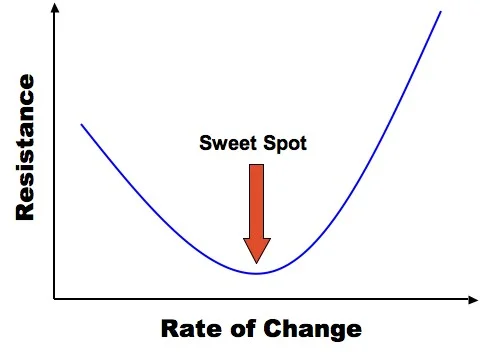
Are we better off with changes rather than just change?
Girard is a thinker who brought to my awareness that if the tension of world is not dealt with then the "social fabric will burst". The dominate way we deal with tension in the world is by scapegoating someone or something. Through the discrediting, removal or killing of the scapegoat the tension is released and the group is brought to a temporary peace. But because this "remedy" requires ongoing violence towards the people within the system , Girard reminds us what Jesus said, "a kingdom divided against itself cannot stand." Thus this cycle of violence is leading us toward destruction and not toward the promised peace.
In order for this system to work the group needs to be unified against the scapegoat. The majority of people have to believe that "this" or "that" is the reason there is tension in the community. You cannot have a witch hunt if there is not a mob who believes that some (not all) people are witches.
If unity of the mob in their disdain of the scapegoat is required for the cycle to "work" then what would happen if the group could not unify against an agreed upon scapegoat?
Would this mean that we would have to deal with our tensions in ways other than by identifying and destroying a scapegoat?
When I was in seminary I was trained that to make changes in the church one must be slow because too much change too fast creates it hard for the church. We were told that "change is hard" and so any change must be approached with care and follow up. Over the past year I wondered if the slow rate of change actually gives people a ready made scapegoat that people all agree is "the problem".
When there is one change in the system it is clear to everyone that the change is being made and then everyone is focused only on that one change. Everyone who is angry about the change builds a backing because everyone is focused on this one change. Those who are not angered over the change can be caught up in the growing frenzy as they see what looks like a growing number of people who are really upset.
Soon enough, there is a mob unified against the change and there you have a mob against a scapegoat. And the mob will do what mobs do to scapegoats.
The church I am in ministry with has gone through a number of changes one after the other. Staff changes, worship changes, infrastructure changes, structural changes, leadership changes all happening over the course of the year. What has become clear at this stage in the game is the grumblings that I hear are minimal and fractured. That is to say, there is not a unified mob.

Does multiple changes refract the tension in the community so that the community cannot rally against a single scapegoat? And if the community cannot rely upon the scapegoat mechanism to resolve the tension, does the community find healthier ways to deal with the tension?

Be the change by Jason Valendy is licensed under a Creative Commons Attribution-NonCommercial-ShareAlike 3.0 Unported License.