
Just a problem with living in the moment
A common practice in popular spirituality is to "live in the moment". "Live in the moment". "Savor the moment". "Being in the present", There are a number of slogans that emphasis the importance of being present moment-centric.
There is a story of Jesus going up on a mountain with some disciples and Jesus is transfigured before them. While some of the disciples want to 'live in the moment' and build shrines so not to come down the mountain, God commands that they must come down from the mountain.
Why?
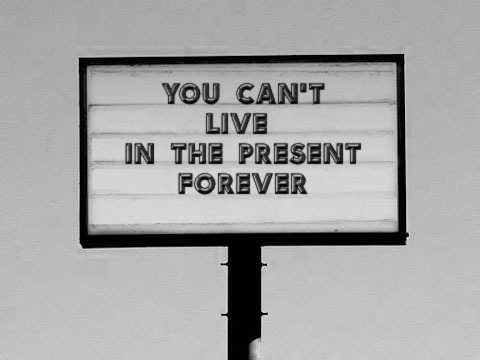
When we are present moment-centric then we do not think about the future. Which is a bit problematic for those who believe that we should be doing what we can to better the world around us. Why would I want to better the world around me if I am only living in the moment?
It is clear that to live in the moment does not take seriously the work of the future or the lessons of the past. Present moment-centrism might be good for the individual for a time, but that is all that it is. Good for the individual.
And when we have a spirituality that is focused on the individual I am not sure if that spirituality is not just an idolization of the self.
Word of God for the people of God - Thanks be to God
Walter Brueggemann was being interviewed on the Home Brewed Christianity podcast a few episodes back. In the interview/discussion it was brought up in some form or fashion the reason Christians say, "The Word of God for the people of God. Thanks be to God."* after the scripture is read in worship.

Bruggemann brought up that a reason we say this after the scripture is to affirm that the scripture is our story/text. It is the text which helps define and identify us as a community and a people. This is the Word above all other would be authoritative words in our world. Not the Constitution. Not the Bill of Rights. Not the philosophical thought of Marx or Locke or Dawkins or "the Market" or Plato or Rand. There are devotees of these sources which will elevate these authorities to demi-god status.
For the Christian to say, scripture is the Word of God is not only to say that these other sources are not authoritative in our lives, but it also says that these other sources are in fact not God.
___________
*It is worth noting that we say the Word of God, and not the words of God. This public affirmation of the Scripture is not an affirmation of the idea that what was just read are the literal and specific words of God.
What if the "God shaped" hole was actually God?
We have heard it said that humans have a "God shaped hole" in our souls that we try to fill up with different things. We are then told of the many different material things we seek to fill that hole: money, sex, power, etc. It is a common sermon and a common beginning to a Bible tract.

Recently Peter Rollins has been asking the question, what if the God shaped hole was not a void at all, but what if that hole was God.
Part of what he is getting at is that the church is set up like a market place. The church says there is a void in your life and we (the church) have the solution: Community, God, Love, etc.
This is a problem, because God is not a commodity that we can "sell".
So rather than trying to "fill the hole", the questions are raised: What if God is not something that we 'plug into' our lives like a new technology to fill a (fabricated) void? What if God is the hole in our lives and we are called to embrace that emptiness and chaos and darkness? And when we embrace that chaos within us, then does death lose its sting?

Be the change by Jason Valendy is licensed under a Creative Commons Attribution-NonCommercial-ShareAlike 3.0 Unported License.