
The other side of itinerancy
Methodist churches are structured in a way that each church has a minister that is appointed. That is to say ministers are not hired by the local church but rather that local church receives a minister at the direction of the bishop. It is a system called itinerancy and it is also found in other denominations such as Catholic and Episcopalian.
As a minister, I am the one who is appointed by the bishop from one church to another. Within the UMC I am the one who leaves the local church and the laity are the ones who stay behind. Methodist clergy are not accustom to being the ones to stay behind.
All of this changed just the other day.
When someone is elected a bishop then the minister is appointed to go to another conference to serve as that conference's bishop. Even the bishops fall under the itinerancy system. Additionally, the Central Texas Conference has never had a minister who was elected a bishop. To put this another way, the CTC has never had a minister itinerate out.
All of that change just the other day.
Rev. Mike Mckee, the senior minister of FUMC Hurst (a church in the CTC) was elected a bishop. The first time the CTC has ever had a bishop elected from it. The first time the CTC had a home grown bishop itinerate out. It was the first time the CTC was left behind.
I am delighted for Bishop McKee and the CTC, but I am sad to see my mentor, minister and friend move to another conference.
I guess this is what the other side of itinerancy feels like.
What are your morals?

Here is an excerpt from the book:
"Republicans don’t just aim to cause fear, as some Democrats charge. They trigger the full range of intuitions described by Moral Foundations Theory. Like Democrats, they can talk about innocent victims (of harmful Democratic policies) and about fairness (particularly the unfairness of taking tax money from hardworking and prudent people to support cheaters, slackers, and irresponsible fools). But Republicans since Nixon have had a near-monopoly on appeals to loyalty (particularly patriotism and military virtues) and authority (including respect for parents, teachers, elders, and the police, as well as for traditions). And after they embraced Christian conservatives during Ronald Reagan’s 1980 campaign and became the party of “family values,” Republicans inherited a powerful network of Christian ideas about sanctity and sexuality that allowed them to portray Democrats as the party of Sodom and Gomorrah."
His point in this is that conservatives generally have a larger pallet for making moral claims than liberals do. (Mind you the author is very liberal on all accounts). His point is that if liberals want to become proactive in helping others move toward a more liberal society, then liberals must tap into more than just concern for victims and fairness.
Jesus in stained glass
If you have ever seared for Jesus in stained glass, you will find a number of picture of Jesus.Jesus on a cross. Jesus carrying a cross. Jesus with lambs. Jesus with kids. Jesus ascending. Jesus looking like he will karate chop you. Jesus looking like he will own you in a staring contest.
Loads of Jesuses (Jesi?).
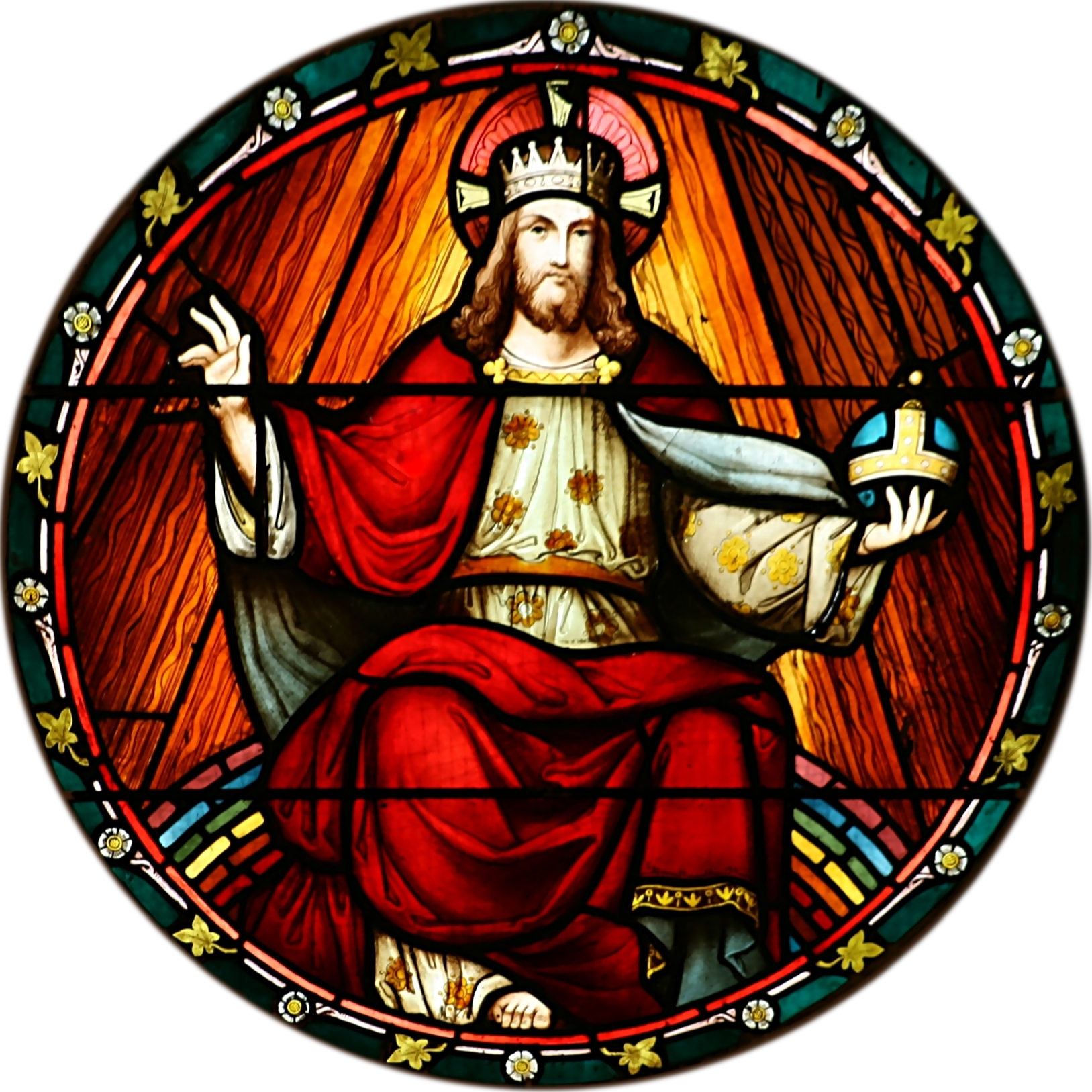 We pick out images of Jesus that speak to us and then use those images to make stained glass. And have you noticed that so many of the images are of a peaceful Jesus?
I asked a group of people today that if they had one shot to commission a stained glass image of Jesus what would they choose?
The image you choose is more than what image you like. The image you choose reflects the image of God you have. The image of God you have directs the way you think about God. The way you think about God has a direct impact on how you live and function in the world.
Picking out an image of Jesus for a stained glass is a spiritual exercise. I would pick an image of Jesus turning over the tables or a picture of Jesus out of Mark 5.
You may recall a provocative set of pictures created around Jesus by LaChapelle. What is the artist saying with these images? What are you saying with yours?
Loads of Jesuses (Jesi?).
I asked a group of people today that if they had one shot to commission a stained glass image of Jesus what would they choose?
The image you choose is more than what image you like. The image you choose reflects the image of God you have. The image of God you have directs the way you think about God. The way you think about God has a direct impact on how you live and function in the world.
Picking out an image of Jesus for a stained glass is a spiritual exercise. I would pick an image of Jesus turning over the tables or a picture of Jesus out of Mark 5.
You may recall a provocative set of pictures created around Jesus by LaChapelle. What is the artist saying with these images? What are you saying with yours?

Be the change by Jason Valendy is licensed under a Creative Commons Attribution-NonCommercial-ShareAlike 3.0 Unported License.