
A Coalition of the what!
There is a thought out there in business and even in the church that leaders and institutions ought to focus on those who are "willing". Willing to go along and try a new thing out. Willing to change. Willing to be a part of something. Willing to do. From former presidents use of the phrase coalition of the willing to even those who advocate for businesses to focus on the company fans, putting your emphasis on those who are "willing" is not really the description I would use to speak of the mission of the church.
Too often the church sets up events and programs in order to attract those who are 'willing' to come to it. We ask people to be in leadership who are 'willing' to give of their time. We even have been known to change the form and function or date and time of a ministry in order to coincide with the leaderships level of 'willingness'. But the fact of the matter is if we are looking for those who are willing then we will surely drive the church into the ground.
Rather than looking for the willing, perhaps the church is at its best when we are looking for the faithful. I know people who are willing to pray but it seems the world needs people who faithfully pray. I know people who are willing to serve but the world needs people to faithfully serve.

Faithfulness does not always mean one is willing.
Jesus was not willing to die as he prayed in the garden but he was faithful and found himself at the cross. Rosa Parks was not willing to give up her seat because she was faithful to the cause of justice. Some people are not willing to take a new job but remain faithful to the cause of providing for their family and so they take a job they hate. Some people are not willing to support a political candidate but remain faithful to their political party and vote for her/him anyway.
What the church needs is not to focus on being willing but being faithful. When we are faithful to the Culture of God, the world is changed.
If we are just willing, then change may never come.
Too often the church sets up events and programs in order to attract those who are 'willing' to come to it. We ask people to be in leadership who are 'willing' to give of their time. We even have been known to change the form and function or date and time of a ministry in order to coincide with the leaderships level of 'willingness'. But the fact of the matter is if we are looking for those who are willing then we will surely drive the church into the ground.
Rather than looking for the willing, perhaps the church is at its best when we are looking for the faithful. I know people who are willing to pray but it seems the world needs people who faithfully pray. I know people who are willing to serve but the world needs people to faithfully serve.
Faithfulness does not always mean one is willing.
Jesus was not willing to die as he prayed in the garden but he was faithful and found himself at the cross. Rosa Parks was not willing to give up her seat because she was faithful to the cause of justice. Some people are not willing to take a new job but remain faithful to the cause of providing for their family and so they take a job they hate. Some people are not willing to support a political candidate but remain faithful to their political party and vote for her/him anyway.
What the church needs is not to focus on being willing but being faithful. When we are faithful to the Culture of God, the world is changed.
If we are just willing, then change may never come.
Augustine's Confessions - God in hell?
A pivotal work in Western Christianity is volume of books by Augustine called Confessions. Recently I have begun to read some of Confessions and have come across a little section that I found rather interesting.
From the second chapter of the first book, Augustine wrote:
 "And how shall I call upon my God -- my God and my Lord? For when I call on him I ask him to come into me. And what place is there in me into which my God can come? How could God, the God who made both heaven and earth, come into me? Is there anything in me, O Lord my God, that can contain thee? Do even the heaven and the earth, which thou hast made, and in which thou didst make me, contain thee? Is it possible that, since without thee nothing would be which does exist, thou didst make it so that whatever exists has some capacity to receive thee? Why, then, do I ask thee to come into me, since I also am and could not be if thou wert not in me? For I am not, after all, in hell -- and yet thou art there too, for 'if I go down into hell, thou art there.' Therefore I would not exist -- I would simply not be at all -- unless I exist in thee, from whom and by whom and in whom all things are. Even so, Lord; even so. Where do I call thee to, when I am already in thee? Or from whence wouldst thou come into me? Where, beyond heaven and earth, could I go that there my God might come to me -- he who hath said, 'I fill heaven and earth'?"
How about that? Augustine, a HUGE pillar of the Western Church writes that there is no place in which God is not present - not even hell.
If God is in hell, then is it really hell?
From the second chapter of the first book, Augustine wrote:
"And how shall I call upon my God -- my God and my Lord? For when I call on him I ask him to come into me. And what place is there in me into which my God can come? How could God, the God who made both heaven and earth, come into me? Is there anything in me, O Lord my God, that can contain thee? Do even the heaven and the earth, which thou hast made, and in which thou didst make me, contain thee? Is it possible that, since without thee nothing would be which does exist, thou didst make it so that whatever exists has some capacity to receive thee? Why, then, do I ask thee to come into me, since I also am and could not be if thou wert not in me? For I am not, after all, in hell -- and yet thou art there too, for 'if I go down into hell, thou art there.' Therefore I would not exist -- I would simply not be at all -- unless I exist in thee, from whom and by whom and in whom all things are. Even so, Lord; even so. Where do I call thee to, when I am already in thee? Or from whence wouldst thou come into me? Where, beyond heaven and earth, could I go that there my God might come to me -- he who hath said, 'I fill heaven and earth'?"How about that? Augustine, a HUGE pillar of the Western Church writes that there is no place in which God is not present - not even hell.
If God is in hell, then is it really hell?
If everyone has access to expert, then what is the function of clergy?
I had a conversation with my friend Kyle and we were talking about how he did not need a plumber to fix a leak in him home because he watched a YouTube video on how to repair it. What would have cost him hundreds of dollars just a few years ago, cost him much less because he did not have to pay for the knowledge the expert plumber has.
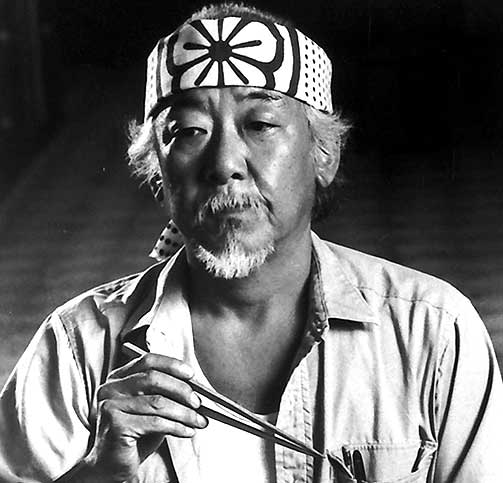 The access many people have these days to 'expert' knowledge has called into question the need for a number of jobs. Why do I need a travel agent if I have Travelocity? Why do I need to hire a professional camera person when my friend has a nice camera and would enjoy taking my family pictures? Why do I need a minister, who used to be the local theologian, if I have access to the same resources?
For a while the minister was the local 'expert' on morality and theology and ethics. People would seek out a minister for a number of spiritual, moral and ethical problems/concerns. The minister was the one with the 'expert' knowledge and the seminary education which qualified the minister to be the local theologian.
While some people still come to a minister for questions and counselling or theological questions, it is more and more the case that people are self-diagnosing and using the internet to come to their own opinions and understandings on the questions they have.
So if everyone has access to "expert" knowledge, then what is the future of the "expert" theologian minister?
Perhaps one of the roles of the minister is to no longer be the expert but the one who is given trust and time to pilferer through all the "expert" knowledge that is out there and discern what is of value? Perhaps the minister is a job that morphs from "expert" to "filter". Perhaps the minister is a job in which one is asked to take the time to help filter out the noise that is all around us and invites us to hear what is Good.
I am sure there are still places in which the minister is the local expert and there are ministers who see themselves as the expert on a good number of things. As I see it, spending time being an expert is a fine thing, until everyone knows what you know.
Christians are not experts in salvation or faith or religion or spirituality. We are called to be filters who observe and listen to the world and discern what is Good. What would a spirituality look like if it was not pursuing expert knowledge but becoming a noise filter?
The access many people have these days to 'expert' knowledge has called into question the need for a number of jobs. Why do I need a travel agent if I have Travelocity? Why do I need to hire a professional camera person when my friend has a nice camera and would enjoy taking my family pictures? Why do I need a minister, who used to be the local theologian, if I have access to the same resources?For a while the minister was the local 'expert' on morality and theology and ethics. People would seek out a minister for a number of spiritual, moral and ethical problems/concerns. The minister was the one with the 'expert' knowledge and the seminary education which qualified the minister to be the local theologian.
While some people still come to a minister for questions and counselling or theological questions, it is more and more the case that people are self-diagnosing and using the internet to come to their own opinions and understandings on the questions they have.
So if everyone has access to "expert" knowledge, then what is the future of the "expert" theologian minister?
Perhaps one of the roles of the minister is to no longer be the expert but the one who is given trust and time to pilferer through all the "expert" knowledge that is out there and discern what is of value? Perhaps the minister is a job that morphs from "expert" to "filter". Perhaps the minister is a job in which one is asked to take the time to help filter out the noise that is all around us and invites us to hear what is Good.
I am sure there are still places in which the minister is the local expert and there are ministers who see themselves as the expert on a good number of things. As I see it, spending time being an expert is a fine thing, until everyone knows what you know.
Christians are not experts in salvation or faith or religion or spirituality. We are called to be filters who observe and listen to the world and discern what is Good. What would a spirituality look like if it was not pursuing expert knowledge but becoming a noise filter?

Be the change by Jason Valendy is licensed under a Creative Commons Attribution-NonCommercial-ShareAlike 3.0 Unported License.