
Beyond Orthodox and Orthopraxy
Ortho - from the Greek
orthos
("right", "true", "straight")
Dox - from the Greek
("opinion" or "belief", related to
dokein
, "to think"
Much of the church focuses on the "right belief" of the parishioners. Many of the conversations I have with people are rooted in what is orthodox Christian thought and what is not. The current state of the Church places a premium on orthodox thought. The thing is orthodox thought is not just the idol of the Church but of our world. We have a desire to ensure that people have the right thoughts on things.
This is not a "bad" thing, but when orthodoxy is out of balance with orthopraxy (p
rax - from the Greek
praxia
"action", "activity") then things get a little weird. This imbalance can be seen when members of the Church will preach love but stand stand on corners and condemn the "heretics" (heresy - from the Greek
hairetikos
meaning "able to choose").
Arguing orthodox thought happens in the world of science as well as the debate of climate change rages on or the debates of the mysteries of the world continue to perplex the mind.
The church spends a lot of time getting people to orthodox thought. For instance, the church teaches people that it is a good thing to give of their time, talents gifts and service to the world. The belief that giving is a good thing is "orthodox" in Christian thought, and the church is a place to instill that idea into the minds of people.
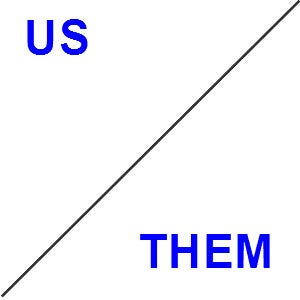
In order to ensure that orthodox is not out of balance, there is orthopraxy - which has come to mean "doing the right things". It is not enough to intellectually know about the importance of giving, but if you want to be a Christian you must
actually
give. It is in the doing of faith that faith is given flesh. It is the whole, "It is not what you say but it is what you do" mentality. Orthopraxy is meant to be a counter-weight to orthodoxy.
But like all weight and counter-weights, this creates a dichotomy that ends up pitting one against the other. So you have people in the church that place the importance on ensuring people have the right beliefs and then there are people who are not concerned with beliefs but are invested to ensure we are doing right actions. Christians talk about the balance between "faith" and "works".
The problem is that Christianity is not dualistic in thought or deed. What sets Christianity apart is the Trinitarian nature of our understanding of God. This is the Good News of Jesus, there is a third way that is not being held up in this conversation between orthodoxy and orthopraxy and it is this third way, which breaks the dichotomy of faith and works, that will be the topic of the next post.
Analog and Digital
I have met a number of young people who are savvy with technology and yet think very analogically at the same time I have met much older people who do not know snot about technology but think much more digitally.

These are just some basic thoughts that are not original and others around the world have already pointed out that how we address change is not generational but more worldview specific. It is the job of the digital thinkers to learn how the analog thinkers address change because it is the digital thinkers who are calling into question the sustainability of the current systems.
Quick question - do you think the church needs to be better (more efficient, greater communication, etc.) or do you think the church needs to be different (new language, different focus, etc.)?
Dr. Seuss and Ethics - Repost from Buzzfeed


Be the change by Jason Valendy is licensed under a Creative Commons Attribution-NonCommercial-ShareAlike 3.0 Unported License.