
Is the UMC heading the way of No Child Left Behind?
The Associated Press had this little article the other day which made me think of the UMC's latest push to move toward greater concern about 'metrics'.
Nation wide the UMC is requiring a number of different metrics to be counted and logged into a network online. Basic stuff really. The UMC is saying that it is important to assess where each church is and by counting these different metrics (people in worship, dollars given away, baptisms, etc.) we can begin to set goals for each local church. These goals will be able to help churches who might be "failing".
Ten years ago the USA adopted the No Child Left Behind (NCLB) Act which sounds rather similar to what the UMC currently saying. NCLB has been exposed for radically falling short of its intended goals (irony if I have ever heard of it). Students are falling behind in math and science and funding is being cut in all areas that are not test related. Teachers are expected to focus on the numbers of the test and students become stats on a spreadsheet.
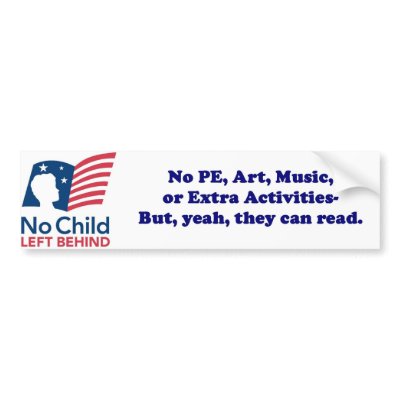 If the UMC is really embracing the almighty metrics, then might we be wise enough to know that just because people are in worship they are not being spiritually formed. Just because the books might not show service hours does not mean people are not serving their neighbor. Even if people do not know the micro stories of the Bible does not mean the macro narrative is not guiding their lives.
If you are in the UMC I encourage you to read this short article and heed the warnings that we can learn from the failings of the NCLB act.
Nation wide the UMC is requiring a number of different metrics to be counted and logged into a network online. Basic stuff really. The UMC is saying that it is important to assess where each church is and by counting these different metrics (people in worship, dollars given away, baptisms, etc.) we can begin to set goals for each local church. These goals will be able to help churches who might be "failing".
Ten years ago the USA adopted the No Child Left Behind (NCLB) Act which sounds rather similar to what the UMC currently saying. NCLB has been exposed for radically falling short of its intended goals (irony if I have ever heard of it). Students are falling behind in math and science and funding is being cut in all areas that are not test related. Teachers are expected to focus on the numbers of the test and students become stats on a spreadsheet.
If the UMC is really embracing the almighty metrics, then might we be wise enough to know that just because people are in worship they are not being spiritually formed. Just because the books might not show service hours does not mean people are not serving their neighbor. Even if people do not know the micro stories of the Bible does not mean the macro narrative is not guiding their lives. If you are in the UMC I encourage you to read this short article and heed the warnings that we can learn from the failings of the NCLB act.
The Underdog Phenomena
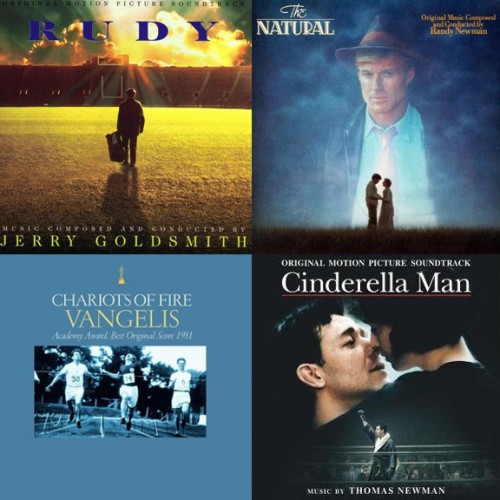
There are a number of people who try to explain why this underdog effect is strong in people and no one knows the real answer. Perhaps it could very well be that we cheer for the underdog because if winners always win then there is no point to pay attention to the game. There are a number of theories put out there as to why so many of us pull for the underdog, and I would submit perhaps it is rooted in Spirituality.

Could it be that the original concern for the underdog came by way of religion? Looking at religious laws you can see a concern for the social underdogs. While we judge these laws by today's standards and thus they seem in many ways outdated, in the time they were created they were huge steps forward for care of the underdogs.
Could it be evidence to something "more" in this world that would give us a concern for the underdog. Ants, cows, birds, and fish do not care about the underdog. People do.
Could it be that people care about the underdog (and thus "cheer" for them when we can) because of a revelation in humanity over time? A revelation that cannot be seen or measured or observed but one that in fact influences the world. A revelation that Christians call Christ.
Reading the Bible via Micro or Macro
Our church is currently undertaking 90 days through the New Testament. The translation we are using is the Common English Bible, a new translation.
As the church has taken this on, I have been asked what "I think of the CEB translation."
Not ever sure ever how to answer this question, it is clear to me that there seems to be two major tribes of people who read the Bible. The "Micros" and the "Macros".
The Micros are those who dissect the Bible in such a way that they look at phrases and words that are in the Bible and compare and contrast them to the phrases and words in other translations (or even source material). Seminaries are great at teaching Micros. The Western worldview is really big on this sort of thing. We dissect things and try to reduce, categorize, and understand each little thing. I was trained in this way of thinking and value it greatly.
 Reading the Bible as Micro leads to Bible drills and trivia contests that people raised in the Baptist tradition are well aware of. Reading the Bible in the style of Micro is helpful and educational.
The problem I have discovered in my own life is Micro reading of the Bible is informational but has not been formational. Formational reading of the Bible in my life has come by way of the Macro.
Macro reading of the Bible is one that takes the large picture of the Bible. You may not know the back story of Job but you know the Story of Job. Macros read the Bible like one would read poetry - cadence and rhythm and flow matter. Macros love the King James Bible because it is beautiful. Funerals will have the 23rd Psalm read and it is always the King James Version. The individual words do not matter as much as the flow and overall feel of the reading.
Much like in school, we judge people on their Micro skills when it comes to "knowing the Bible". You "know the Bible" when you are able to recall the answers to the questions (sound likes a test to me). The UMC is in a frantic that people don't "know the Bible". So we teach the Bible. We teach by way of Micro.
It is a fallacy to think that giving people more information will change behavior. Just look at smokers or drinkers who are addicts. More information does not change behavior.
Micro reading of the Bible will get you better at drills, but it rarely transforms your life.
If you are looking to read the Bible, we may start with a Micro lens, but Christianity is about teaching our Micro-selves to embrace our Macro-selves.
As the church has taken this on, I have been asked what "I think of the CEB translation."
Not ever sure ever how to answer this question, it is clear to me that there seems to be two major tribes of people who read the Bible. The "Micros" and the "Macros".
The Micros are those who dissect the Bible in such a way that they look at phrases and words that are in the Bible and compare and contrast them to the phrases and words in other translations (or even source material). Seminaries are great at teaching Micros. The Western worldview is really big on this sort of thing. We dissect things and try to reduce, categorize, and understand each little thing. I was trained in this way of thinking and value it greatly.
Reading the Bible as Micro leads to Bible drills and trivia contests that people raised in the Baptist tradition are well aware of. Reading the Bible in the style of Micro is helpful and educational. The problem I have discovered in my own life is Micro reading of the Bible is informational but has not been formational. Formational reading of the Bible in my life has come by way of the Macro.
Macro reading of the Bible is one that takes the large picture of the Bible. You may not know the back story of Job but you know the Story of Job. Macros read the Bible like one would read poetry - cadence and rhythm and flow matter. Macros love the King James Bible because it is beautiful. Funerals will have the 23rd Psalm read and it is always the King James Version. The individual words do not matter as much as the flow and overall feel of the reading.
Much like in school, we judge people on their Micro skills when it comes to "knowing the Bible". You "know the Bible" when you are able to recall the answers to the questions (sound likes a test to me). The UMC is in a frantic that people don't "know the Bible". So we teach the Bible. We teach by way of Micro.
It is a fallacy to think that giving people more information will change behavior. Just look at smokers or drinkers who are addicts. More information does not change behavior.
Micro reading of the Bible will get you better at drills, but it rarely transforms your life.
If you are looking to read the Bible, we may start with a Micro lens, but Christianity is about teaching our Micro-selves to embrace our Macro-selves.

Be the change by Jason Valendy is licensed under a Creative Commons Attribution-NonCommercial-ShareAlike 3.0 Unported License.