
The Underdog Phenomena
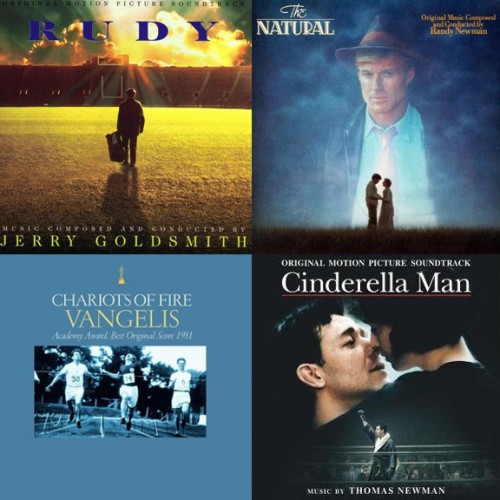
There are a number of people who try to explain why this underdog effect is strong in people and no one knows the real answer. Perhaps it could very well be that we cheer for the underdog because if winners always win then there is no point to pay attention to the game. There are a number of theories put out there as to why so many of us pull for the underdog, and I would submit perhaps it is rooted in Spirituality.

Could it be that the original concern for the underdog came by way of religion? Looking at religious laws you can see a concern for the social underdogs. While we judge these laws by today's standards and thus they seem in many ways outdated, in the time they were created they were huge steps forward for care of the underdogs.
Could it be evidence to something "more" in this world that would give us a concern for the underdog. Ants, cows, birds, and fish do not care about the underdog. People do.
Could it be that people care about the underdog (and thus "cheer" for them when we can) because of a revelation in humanity over time? A revelation that cannot be seen or measured or observed but one that in fact influences the world. A revelation that Christians call Christ.
Reading the Bible via Micro or Macro
Our church is currently undertaking 90 days through the New Testament. The translation we are using is the Common English Bible, a new translation.
As the church has taken this on, I have been asked what "I think of the CEB translation."
Not ever sure ever how to answer this question, it is clear to me that there seems to be two major tribes of people who read the Bible. The "Micros" and the "Macros".
The Micros are those who dissect the Bible in such a way that they look at phrases and words that are in the Bible and compare and contrast them to the phrases and words in other translations (or even source material). Seminaries are great at teaching Micros. The Western worldview is really big on this sort of thing. We dissect things and try to reduce, categorize, and understand each little thing. I was trained in this way of thinking and value it greatly.
 Reading the Bible as Micro leads to Bible drills and trivia contests that people raised in the Baptist tradition are well aware of. Reading the Bible in the style of Micro is helpful and educational.
The problem I have discovered in my own life is Micro reading of the Bible is informational but has not been formational. Formational reading of the Bible in my life has come by way of the Macro.
Macro reading of the Bible is one that takes the large picture of the Bible. You may not know the back story of Job but you know the Story of Job. Macros read the Bible like one would read poetry - cadence and rhythm and flow matter. Macros love the King James Bible because it is beautiful. Funerals will have the 23rd Psalm read and it is always the King James Version. The individual words do not matter as much as the flow and overall feel of the reading.
Much like in school, we judge people on their Micro skills when it comes to "knowing the Bible". You "know the Bible" when you are able to recall the answers to the questions (sound likes a test to me). The UMC is in a frantic that people don't "know the Bible". So we teach the Bible. We teach by way of Micro.
It is a fallacy to think that giving people more information will change behavior. Just look at smokers or drinkers who are addicts. More information does not change behavior.
Micro reading of the Bible will get you better at drills, but it rarely transforms your life.
If you are looking to read the Bible, we may start with a Micro lens, but Christianity is about teaching our Micro-selves to embrace our Macro-selves.
As the church has taken this on, I have been asked what "I think of the CEB translation."
Not ever sure ever how to answer this question, it is clear to me that there seems to be two major tribes of people who read the Bible. The "Micros" and the "Macros".
The Micros are those who dissect the Bible in such a way that they look at phrases and words that are in the Bible and compare and contrast them to the phrases and words in other translations (or even source material). Seminaries are great at teaching Micros. The Western worldview is really big on this sort of thing. We dissect things and try to reduce, categorize, and understand each little thing. I was trained in this way of thinking and value it greatly.
Reading the Bible as Micro leads to Bible drills and trivia contests that people raised in the Baptist tradition are well aware of. Reading the Bible in the style of Micro is helpful and educational. The problem I have discovered in my own life is Micro reading of the Bible is informational but has not been formational. Formational reading of the Bible in my life has come by way of the Macro.
Macro reading of the Bible is one that takes the large picture of the Bible. You may not know the back story of Job but you know the Story of Job. Macros read the Bible like one would read poetry - cadence and rhythm and flow matter. Macros love the King James Bible because it is beautiful. Funerals will have the 23rd Psalm read and it is always the King James Version. The individual words do not matter as much as the flow and overall feel of the reading.
Much like in school, we judge people on their Micro skills when it comes to "knowing the Bible". You "know the Bible" when you are able to recall the answers to the questions (sound likes a test to me). The UMC is in a frantic that people don't "know the Bible". So we teach the Bible. We teach by way of Micro.
It is a fallacy to think that giving people more information will change behavior. Just look at smokers or drinkers who are addicts. More information does not change behavior.
Micro reading of the Bible will get you better at drills, but it rarely transforms your life.
If you are looking to read the Bible, we may start with a Micro lens, but Christianity is about teaching our Micro-selves to embrace our Macro-selves.
Bees see the world differently. They will go to hell...
As you know, bats rely on ultrasonic waves in order to understand the world. In fact is is all they can use to understand the world. If you were to ask a bat about what they "see" they would describe it rather differently than the way you and I would "see" something as we use a small bit of ultraviolet light to "see".
Bees on the other hand use ultraviolet light, but they see differently than humans do.
 |
| What humans see and what bees see. |
 |
| Snakes use infrared light. |
A tick picks up on butyric acid and temperature, while ghost fish picks up on electrical fields.
We have this assumption that if human beings were given the "proper" information then they will "see" the correct and most logical conclusion. So people on different sides try to lay out arguments so that others can "see" where they are coming from in order to come to the same "logical" conclusion. When the other person does not come to the same conclusion, they are idiots, or wrong, or going to hell (the punishment is related to your level of religiosity it seems).
But no one thinks bees and bats and snakes are going to hell because they do not see the world like we do.
So just two things: 1) who is to say that there is more out there to be seen and we just cannot observe it yet (we did not even know that these animals "see" the world differently until very recently and with the use of technology) and 2) bees, bats, and snakes see the world differently - that does not mean they are idiots, wrong or going to hell.

Be the change by Jason Valendy is licensed under a Creative Commons Attribution-NonCommercial-ShareAlike 3.0 Unported License.