
Moving closer to Truth
Science classes in grade school taught a distilled version of the "scientific method" which consisted of a few steps:
- Generate hypothesis
- Test hypothesis
- Evaluate results
- Hypothesis confirmed or rejected
- Repeat
The thing I have forgotten about is that in science, one moves closer to Truth by seeking evidence that is contrary to the hypothesis.
This is often the exact opposite in the world of religion. We tend to think we are moving closer to Truth by seeking evidence that supports our hypothesis. That is we have an experience then we look for other things to support our interpretation of that experience. Protestant Christians generally seek out some supportive Scripture.
What we Christians are not very good at is entertaining and seeing evidence to the contrary to our claims. Much of our time is constantly supplying evidence that only supports our claims.
Perhaps a way to move closer to the way non-theists see the world is to begin to invert the way we seek to "justify" Truth. Instead of constantly giving more and more supportive "evidence" to a truth claim, what would it look like to seek out contrary evidence?
What would it look like to see this evidence to the contrary and use that evidence as a starting place for a conversation?
Jesus was a guy who provided evidence to the contrary understanding of the truth claims of the religious authorities of his day.
"God says do not work on the Sabbath." - Truth claim of authorities
"Should we not pull our donkey out of the ditch and save it's life even on the Sabbath?" - evidence to the contrary by Jesus.
"Well perhaps we do not sully understand God's desires for Sabbath." - responsible response of authorities
"Jesus is an a-hole and we should kill this guy." - popular response of authorities
This is often the exact opposite in the world of religion. We tend to think we are moving closer to Truth by seeking evidence that supports our hypothesis. That is we have an experience then we look for other things to support our interpretation of that experience. Protestant Christians generally seek out some supportive Scripture.
What we Christians are not very good at is entertaining and seeing evidence to the contrary to our claims. Much of our time is constantly supplying evidence that only supports our claims.
Perhaps a way to move closer to the way non-theists see the world is to begin to invert the way we seek to "justify" Truth. Instead of constantly giving more and more supportive "evidence" to a truth claim, what would it look like to seek out contrary evidence?
What would it look like to see this evidence to the contrary and use that evidence as a starting place for a conversation?
Jesus was a guy who provided evidence to the contrary understanding of the truth claims of the religious authorities of his day.
"God says do not work on the Sabbath." - Truth claim of authorities
"Should we not pull our donkey out of the ditch and save it's life even on the Sabbath?" - evidence to the contrary by Jesus.
"Well perhaps we do not sully understand God's desires for Sabbath." - responsible response of authorities
"Jesus is an a-hole and we should kill this guy." - popular response of authorities
The rule is that other rules are respected
There is some anxiety with some folk about the idea of "post-modern" thought. I am not sure where this anxiety is rooted and I am not that smart to understand all the nuanced philosophical arguments that people can articulate and understand about different "isms". Recently I came across a bit of a metaphor that helps me understand post-modern a little better which I want to share and keep for later reference.
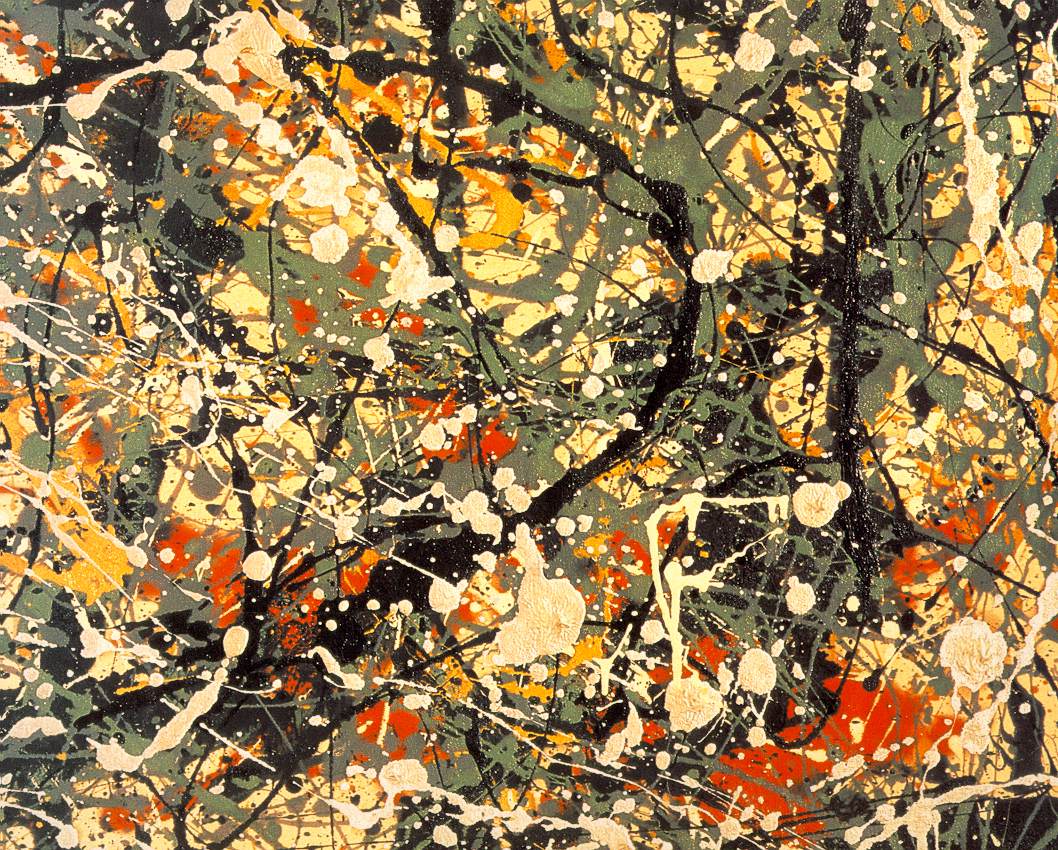
This metaphor is rooted in the understanding of the "arts" (of which I am not the most informed so hang with me).
My wife shares with me that Classical music has certain rules that composers had to follow. So if you were going to do one thing in the musical composition, then you were required to do something else. Certain harmonies are 'allowed' and others are not. This is in part why, I think, classical music will not have a chord that you hear in jazz music. Speaking of jazz, it operates the same way. If you are working under the rules of jazz, then you have to honor those rules of the art.
In the world of the visual arts, if you were painting in the modern age, then you also had rules that you followed. I am not sure what those rules are (thus my lack of knowledge in the arts), but you might be able to see these "rules" applied to impressionist art. These visual arts, when you were working under these different 'rules', had requirements that you obliged by and honored and everyone followed them.
I get this feeling when I see Pollock's art and think, "that is just paint dumped on a canvas, that is not art. I could do that!" My brain is viewing "art" as that which follows a set of rules (which I may not be able to define), and if it violates those rules then I declare it as "not art".
Post-modernism is that time that is upon us that come to the understanding that respects these different sets of "rules". It seems to suggest that we are now no longer limited in our scope of expression and understanding of the world. We now understand that all of these sets of "rules" that exist all have truth in them and no one set of rules has all the truth. There is no one painting that ends the need to have paintings. As great as Dylan was, even Bob Dylan did not end the need to create more music. He did not have exclusive and exhaustive access to music truth.
We live in a time that respects more sets of "rules" in such a way that we no longer require everyone to play by the same set of "rules" in order to paint, compose music or even create theology.
Post-modernism is the rule that respects all the rules.
(Which is why many post-moderns will argue with you when you do not respect all sets of rules.)
Man bites dog...
"Be careful. People like to be told what they already know. Remember that. They get uncomfortable when you tell them new things. New things... well, new things aren't what they expect. They like to know that, say, a dog will bite a man. That is what dogs do. They don't want to know that man bites dog, because the world is not supposed to happen like that. In short, what people think they want is news, but what they really crave is olds . . . Not news but olds, telling people that what they think they already know is true. "
—Terry Pratchett, through the character Lord Vetinari from his "The Truth" a Novel of Disworld.
This might help explain why so many people can become offended by alternate theologies.
—Terry Pratchett, through the character Lord Vetinari from his "The Truth" a Novel of Disworld.
This might help explain why so many people can become offended by alternate theologies.

Be the change by Jason Valendy is licensed under a Creative Commons Attribution-NonCommercial-ShareAlike 3.0 Unported License.