
Reading a book like I follow a recipe
I am not a very good chef. I tend to rely heavily on recipes. You may be the same.
The thing about the way I cook is that I read the recipe and then do what it tells me to do. Usually it turns out well, but there is a problem with that process. When I do this, I do not pay attention to what I am reading. I am reading "one cup of oil" and then I measure one cup of oil. I do not, however, consider how much one cup of oil looks like in the pan. I do not assess if I ought to add more/less oil because of my diet. I just measure and pour.
 So the next time I cook, either that recipe or another, I still have to measure out one cup of oil each time. This slows my cooking process down, uses more dishes to measure and ensures that I will spend more time and resources cleaning up the mess that I have made. Rather, if I could integrate the one cup of oil into my mind, then I would not need to measure each time and I could focus on experimenting with other ingredients in the future.
But since I don't integrate that into my mind, I am limited to sticking to the recipe.
When all the cooking is over I then evaluate if I like the results. I decide if I "like" or "dislike" the meal. The focus is on the end results. If I like it, then I will cook it again. If not then that recipe is out the window.
I find that many times I read a book in the same way I read a recipe.
I read the information, I do not integrate it into my mind (so I constantly have to keep referring back to the recipe/book each time I want to recall it) and I am limited on what I can do with that information. I cannot experiment with the content of the book because I am too busy evaluating if I like what the author said or disliked it.
I read a recipe and then I evaluate it.
I read a book and then I evaluate it.
I miss the critical step of integration! I am quick to judge the content (or the end result) that I forget to integrate what I read into my mind for future experimentation.
If we read the Bible in such a way that we read for information then we evaluate it right away, we do not even give another voice the chance to influence our thoughts/actions. We judge it as good/bad without considering if it actually has something to add to our lives.
Might we learn as a Church to move beyond reading just for information and evaluation and learn to read also for integration.
That is when we are really cooking.
The thing about the way I cook is that I read the recipe and then do what it tells me to do. Usually it turns out well, but there is a problem with that process. When I do this, I do not pay attention to what I am reading. I am reading "one cup of oil" and then I measure one cup of oil. I do not, however, consider how much one cup of oil looks like in the pan. I do not assess if I ought to add more/less oil because of my diet. I just measure and pour.
So the next time I cook, either that recipe or another, I still have to measure out one cup of oil each time. This slows my cooking process down, uses more dishes to measure and ensures that I will spend more time and resources cleaning up the mess that I have made. Rather, if I could integrate the one cup of oil into my mind, then I would not need to measure each time and I could focus on experimenting with other ingredients in the future. But since I don't integrate that into my mind, I am limited to sticking to the recipe.
When all the cooking is over I then evaluate if I like the results. I decide if I "like" or "dislike" the meal. The focus is on the end results. If I like it, then I will cook it again. If not then that recipe is out the window.
I find that many times I read a book in the same way I read a recipe.
I read the information, I do not integrate it into my mind (so I constantly have to keep referring back to the recipe/book each time I want to recall it) and I am limited on what I can do with that information. I cannot experiment with the content of the book because I am too busy evaluating if I like what the author said or disliked it.
I read a recipe and then I evaluate it.
I read a book and then I evaluate it.
I miss the critical step of integration! I am quick to judge the content (or the end result) that I forget to integrate what I read into my mind for future experimentation.
If we read the Bible in such a way that we read for information then we evaluate it right away, we do not even give another voice the chance to influence our thoughts/actions. We judge it as good/bad without considering if it actually has something to add to our lives.
Might we learn as a Church to move beyond reading just for information and evaluation and learn to read also for integration.
That is when we are really cooking.

Jubilee Bank
KIVA is a micro-lending organization which allows individuals to operate like a bank. Someone in a developing country would like to, say, expand their business selling widgets. This entrepreneur does not have the initial capital to front to cost of expansion and thus they contact KIVA. KIVA then sets up a loan and then asks people like you and me to donate our money in order to "fund" the loan. Your donation can be as small as a few dollars, this is in part why it is called "micro-lending". In time, the entrepreneur pays back the loan which you and several others gave.
It makes a lot of sense to make a number of loans in developing nations, in part because $500 in Kenya goes much farther than in developed nations.
KIVA has helped transform lives and I hope you might consider becoming a micro-lender.
A real problem in the United States is that 15% of the population lives at or below the poverty line (which defined as $22,000 for a family of four), which is a record for since the data has been captured in censuses. In addition, it is estimated that 58% of Americans will at some point live at that poverty level for at least one year.
 Statistics can be cited all day long, but that is not the point of this post.
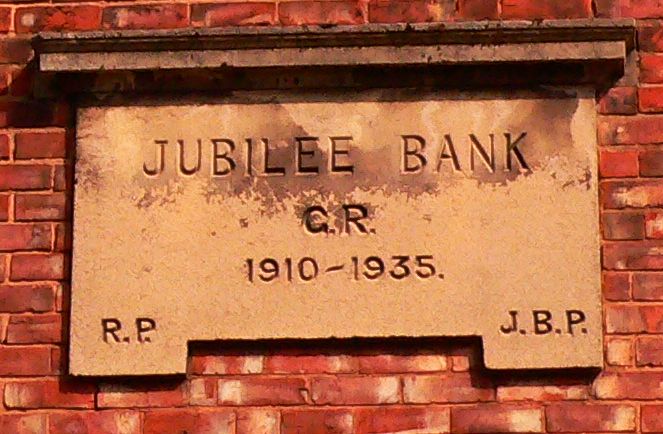
The point is to share with you a new project I am beginning to work on with a few other people (there are four of us) - currently called "Jubilee Bank".
The dream is a micro-lending organization in which the working poor of Fort Worth might be able to acquire loans to cover costs of unforeseen accidents - flat tires, sick child, window unit goes out, etc.
The dream is still just a dream, but there are a few things which are currently in action that take the dream toward a step into reality.
If you have any thoughts on how to set up Jubilee Bank that might be fruitful for those in Fort Worth Texas, post a comment. I meet with a few people in the coming days to see if this idea can become a reality.
Peace.
It makes a lot of sense to make a number of loans in developing nations, in part because $500 in Kenya goes much farther than in developed nations.
KIVA has helped transform lives and I hope you might consider becoming a micro-lender.
A real problem in the United States is that 15% of the population lives at or below the poverty line (which defined as $22,000 for a family of four), which is a record for since the data has been captured in censuses. In addition, it is estimated that 58% of Americans will at some point live at that poverty level for at least one year.
The point is to share with you a new project I am beginning to work on with a few other people (there are four of us) - currently called "Jubilee Bank".
The dream is a micro-lending organization in which the working poor of Fort Worth might be able to acquire loans to cover costs of unforeseen accidents - flat tires, sick child, window unit goes out, etc.
The dream is still just a dream, but there are a few things which are currently in action that take the dream toward a step into reality.
If you have any thoughts on how to set up Jubilee Bank that might be fruitful for those in Fort Worth Texas, post a comment. I meet with a few people in the coming days to see if this idea can become a reality.
Peace.

Be the change by Jason Valendy is licensed under a Creative Commons Attribution-NonCommercial-ShareAlike 3.0 Unported License.