
Why would you come to my family reunion?
In November of 2010 I attended a conference in which Brian McLaren noted the differences in movements and institutions
Movements are organizations which call institutions to new social gains.
Institutions are organizations which conserve the gains made by past movements.
Both are important and both are needed.
 Lately there seems to be a trend in the UMC circles I move that the UMC needs to reclaim being a movement and move away from being an institution. And that language is very populist and raises a lot of "amens" from a usually silent UMC congregation.
With all the rhetoric of getting back to a movement as a denomination, there seems to be a bit of a disconnect going on with the implementation of that "movement talk."
What I mean is that is all the talk of reclaiming "movement status" we still put a lot of emphasis on the importance of the institution. That is to say we still place a ton of emphasis on the importance of worship.
While I think worship is important I am not sure it is helpful that only one aspect of the church is elevated to most important. This elevation of worship sets up a potential to actually worship worship. So you end up getting things like the worship wars.
Let me share an example I have been pondering.

You do not want to come to my family reunion. It is nothing personal about you or me, it is just when you come to my family reunion you will be subject to hear from people you do not know, about things that happened in the past to people you never knew.
Family reunions are the institutional aspect of the family movement.
Family reunions capture the stories of the past. People break break together. People recall celebrations and advances the family made over the years. (Sounds a lot like worship...)
Why would you come to my family reunion? You were not a part of the movement of my family. You were not a part of the movement when my dad followed his dream and hit many obstacles. You were not there when my grandmother and grandfather moved in with us. You were not there at graduations or birthdays.
You are not interested in the institution of my family unless you have been a part of the movement of my family. Which is why my wife, who has been apart of our family for 10 years is more comfortable at our family gathering than you might be. She has been a part of the movement of our family. She appreciates the institution and works to keep it moving.
Because we have elevated worship as the "most important thing we do" as a church, we have made the most important thing an institutional aspect of our Church. And why would anyone who has not been apart of the movement sides of the Church want to be apart of the institutional sides of Church?
So my beloved Church, let us consider that while the institution is important, people will only be interested in preserving it if they were apart of the movements of the Church.
Movements are organizations which call institutions to new social gains.
Institutions are organizations which conserve the gains made by past movements.
Both are important and both are needed.
Lately there seems to be a trend in the UMC circles I move that the UMC needs to reclaim being a movement and move away from being an institution. And that language is very populist and raises a lot of "amens" from a usually silent UMC congregation. With all the rhetoric of getting back to a movement as a denomination, there seems to be a bit of a disconnect going on with the implementation of that "movement talk."
What I mean is that is all the talk of reclaiming "movement status" we still put a lot of emphasis on the importance of the institution. That is to say we still place a ton of emphasis on the importance of worship.
While I think worship is important I am not sure it is helpful that only one aspect of the church is elevated to most important. This elevation of worship sets up a potential to actually worship worship. So you end up getting things like the worship wars.
Let me share an example I have been pondering.
You do not want to come to my family reunion. It is nothing personal about you or me, it is just when you come to my family reunion you will be subject to hear from people you do not know, about things that happened in the past to people you never knew.
Family reunions are the institutional aspect of the family movement.
Family reunions capture the stories of the past. People break break together. People recall celebrations and advances the family made over the years. (Sounds a lot like worship...)
Why would you come to my family reunion? You were not a part of the movement of my family. You were not a part of the movement when my dad followed his dream and hit many obstacles. You were not there when my grandmother and grandfather moved in with us. You were not there at graduations or birthdays.
You are not interested in the institution of my family unless you have been a part of the movement of my family. Which is why my wife, who has been apart of our family for 10 years is more comfortable at our family gathering than you might be. She has been a part of the movement of our family. She appreciates the institution and works to keep it moving.
Because we have elevated worship as the "most important thing we do" as a church, we have made the most important thing an institutional aspect of our Church. And why would anyone who has not been apart of the movement sides of the Church want to be apart of the institutional sides of Church?
So my beloved Church, let us consider that while the institution is important, people will only be interested in preserving it if they were apart of the movements of the Church.
Sabbath and "the day off"
There is a commandment in the Bible about taking a Sabbath day. It is one of the popularly named "big ten" commandments.
Sabbath is often understood/described as a day off for self care.
However, this really is not a great definition of Sabbath and leads to a twisted understanding of what Sabbath is all about.
When the focus on Sabbath is a day off for self care, then we quickly move into a egocentric religion. Sabbath becomes a time for us to renew ourselves so that we can continue to work the next day(s). Sabbath becomes something we get to do as a day of personal pampering or at the very least a day to do "whatever the heck I want to do to recharge my batteries."
As one who self admittedly is not that great at practicing Sabbath, I admit that I sometimes practice Sabbath as a day off in order to recharge my batteries. That is to say, sometimes I treat Sabbath as a "me day".
The times in which I have mistaken Sabbath as a "me day" have been the days which result in the next day being full of anxiety. When I come back from vacation (which I would contend is just a series of "me days") I come back to work with a high level of "oh man am I way behind" and take a couple of days to catch up.
Sabbath is something which does not result in the next day being full of anxiety. If we are taking day(s) off and calling it Sabbath, yet the next day is full of anxiety, then we have not taken Sabbath.
Sabbath is not that time in which we have emptied ourselves or disengaged with the world around us.
Sabbath is not the time in which we "unplug" from reality in order to escape from the woes at hand.
Sabbath is not "me time." Sabbath is "God time."
Sabbath is that time in which we dedicate an extended period of time to listening and reflecting and fully engaging the way in which God might be moving in your life. It is a time in which to reflect on what you feel God is calling you to do in this world. Sabbath is time that is centered on God and not on the me.
Interestingly enough I have found that when I take Sabbath, I am personally restored and refreshed.
When I make time to center myself upon the mysteries of the world and universe...
When I consider the struggles in my neighbors life...
When I reflect how the previous week reflected a sense of call in my life...
When I contemplate how I can use the coming week to live into a new reality...
When I take time to stop focusing on myself...
I encounter a God who provides and gives. I encounter a reality which pulls me into a tempo of life which is refreshing and restoring. When Sabbath is not about me but about God, I discover my next day is not anxiety filled.
It is in this way I encounter true Sabbath.
Sleeping continued...
Recently I posted about surrendering to sleep and I just came across a series of pictures of sleepers from around the world. Below are a couple of my favorites to ponder.
Have you ever been this tired? Where can you or where do you find rest?
Have you ever been this tired? Where can you or where do you find rest?
 |
| A young Chinese couple wait as their baby sleeps on a display bed as they shop at a department store in Beijing on August 15, 2011. (Mark Ralston/AFP/Getty Images) |
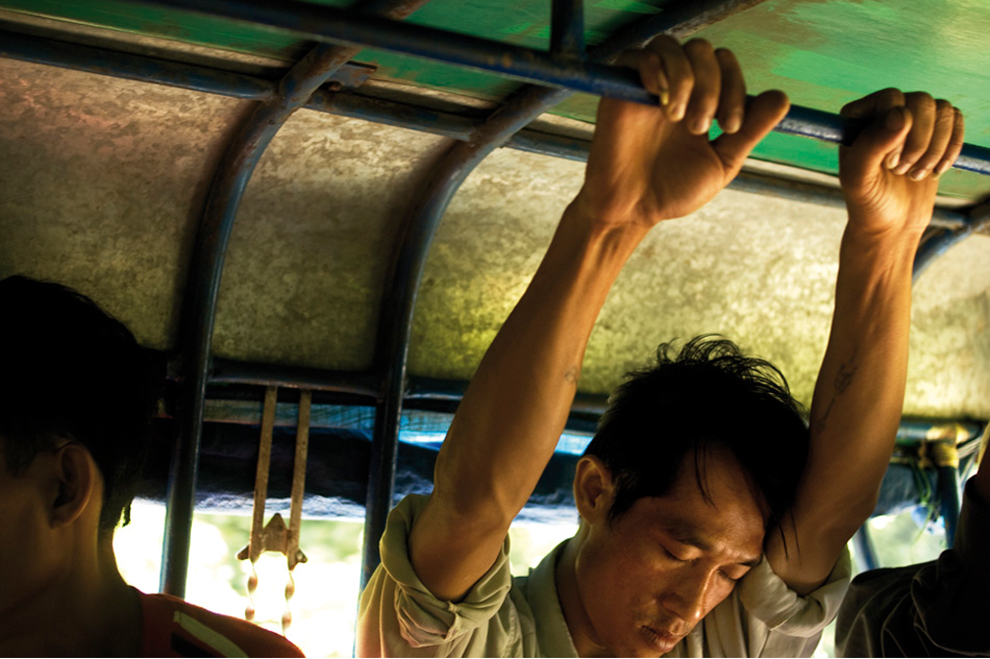 |
| Man asleep in public transport, Lao © Romain Philippon |
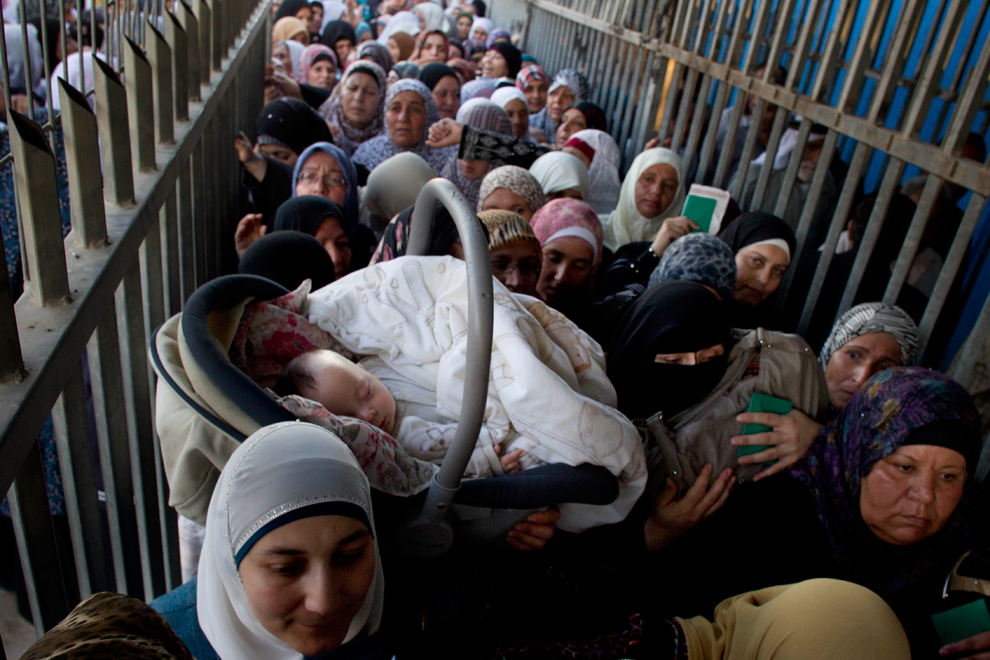 |
| A baby sleeps while Palestinian women attempt to pass the checkpoint on their way to pray at the Al Aqsa Mosque on the second Friday of the Muslim holy month of Ramadan in the West Bank town of Bethlehem on August 12, 2011. (Bernat Armangue/AP) |

Be the change by Jason Valendy is licensed under a Creative Commons Attribution-NonCommercial-ShareAlike 3.0 Unported License.