
Can I just wash my hands?
Today is Maundy Thursday and it is the time in the Church when we recall Jesus and the disciples sharing the last supper and Jesus' "mandate" to his disciples to serve others.
John's Gospel has a dramatic scene in which Jesus' washes the feet of his disciples, to which Peter cries out "Don't wash my feet, I should be washing your feet!" Jesus tells him to be quiet and realize that leaders are those who are willing to serve and that unless Jesus washes his feet then they have no "share" with him. Jesus goes on to instruct the disciples to wash one another's feet.
It is an iconic story and for that reason a tradition has grown up around the thought that on Maundy Thursday, Christians partake in a foot washing ritual.
That is until recently.
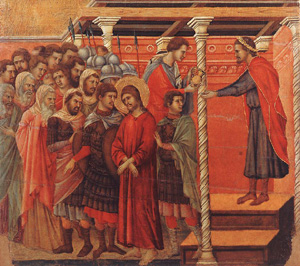 For a number of reasons that are not rational, we have a fear of feet. To make sure we the community is not "uncomfortable" many Christians have substituted at foot washing for a hand washing ritual. This is a bit odd to me because the only person to wash their hands in the whole narrative is Pilate after he condemns Jesus to death, but whatever - feet are weird.
It seems to me that the very fact that we find it weird or strange or uncomfortable or off putting is the exact reason we ought to practice this example of Jesus. Even Peter protests in the story and Jesus basically says, "Peter, sit down, I don't care if you think it is odd that I am washing your feet. This is what those who follow me do. We wash feet. We get dirty. We do the things that no one wants to do. We serve. So I do not care if you find it weird, sit down and let me do this so you can wash others."
Yet, we are still like Peter. Because feet are weird.
Someone whom I respect said to me one time, "Well I don't do the foot washing because it was a cultural practice of Jesus of which we do not do any longer. So it is appropriated for Jesus to wash feet but not so much for us today."
Okay, forget that Jesus actually commands us. Forget that it is something that Jesus actually did and we are to do what Jesus does. We do a number of things today that Jesus did even if they were culturally located.
We have a baptism of repentance.
We practice hospitality.
 We share in common meals.
Even if that is not enough, then let us consider another question. If foot washing is a symbol of getting dirty and serving others, then where is the church, where are you and I, getting dirty and serving others? Have we relegated serving others to writing a check and letting others who "have a call to service and mission" do the work?
Perhaps it is appropriate that we like to wash our hands on Maundy Thursday because we in the Church like to keep our hands from getting too dirty.
John's Gospel has a dramatic scene in which Jesus' washes the feet of his disciples, to which Peter cries out "Don't wash my feet, I should be washing your feet!" Jesus tells him to be quiet and realize that leaders are those who are willing to serve and that unless Jesus washes his feet then they have no "share" with him. Jesus goes on to instruct the disciples to wash one another's feet.
It is an iconic story and for that reason a tradition has grown up around the thought that on Maundy Thursday, Christians partake in a foot washing ritual.
That is until recently.
For a number of reasons that are not rational, we have a fear of feet. To make sure we the community is not "uncomfortable" many Christians have substituted at foot washing for a hand washing ritual. This is a bit odd to me because the only person to wash their hands in the whole narrative is Pilate after he condemns Jesus to death, but whatever - feet are weird. It seems to me that the very fact that we find it weird or strange or uncomfortable or off putting is the exact reason we ought to practice this example of Jesus. Even Peter protests in the story and Jesus basically says, "Peter, sit down, I don't care if you think it is odd that I am washing your feet. This is what those who follow me do. We wash feet. We get dirty. We do the things that no one wants to do. We serve. So I do not care if you find it weird, sit down and let me do this so you can wash others."
Yet, we are still like Peter. Because feet are weird.
Someone whom I respect said to me one time, "Well I don't do the foot washing because it was a cultural practice of Jesus of which we do not do any longer. So it is appropriated for Jesus to wash feet but not so much for us today."
Okay, forget that Jesus actually commands us. Forget that it is something that Jesus actually did and we are to do what Jesus does. We do a number of things today that Jesus did even if they were culturally located.
We have a baptism of repentance.
We practice hospitality.
We share in common meals.Even if that is not enough, then let us consider another question. If foot washing is a symbol of getting dirty and serving others, then where is the church, where are you and I, getting dirty and serving others? Have we relegated serving others to writing a check and letting others who "have a call to service and mission" do the work?
Perhaps it is appropriate that we like to wash our hands on Maundy Thursday because we in the Church like to keep our hands from getting too dirty.
I am not much of a photographer, but this looks awesome
This is not designed to be a commercial post, but I just came across this little video for a patent pending camera technology that integrates current wireless technology and interconnectivity.
It has little to do with Jesus, but it is still amazing.
Way of Jesus - Engaging the world differently
The last post I touched on the need for all of us to repent, that is the need for us to return to our source our beginning and rediscover who we are and how interconnected we are. When we repent we acknowledge that there is more to the world than just what we want to do in it, but that our life is connected to the lives around us and, in the words of MLK, "Whatever affects one directly, affects all indirectly. I can never be what I ought to be until you are what you ought to be. This is the interrelated structure of reality.”
Repenting is, at its core, returning to this interrelated and interconnected reality. (And sometimes that means we have to seek forgiveness or reconciliation or penance or a number of other things we associate with repentance.)
Once we begin on this process of repentance and return to this original understanding of reality, we can begin to engage the world differently - we can engage the world like Jesus does.
When Jesus saw the powerful systems which allow groups to blame victims for problems and then allow victims to blame the group for other problems, Jesus realizes that he cannot continue to engage the world and act this way. He could have easily blamed the Romans and/or Pharisees for destroying individuals which is what some would say they were trying to do to Jesus - identify him as a heretic and destroy him. Jesus could have then taken the role of the sacred victim and rallied people to his cause and rise up against the Romans and/or Pharisees. Which is apparently what some of his followers wanted and expected him to do.
But he does not.
Instead of creating a group of his own that would then blame a larger group for their problems, Jesus engages these powerful groups with non-violent resistance.
Jesus stands before the powers that be and does not try to defend himself or even try to expose the blame game that the authorities are playing. He stands quietly by as they hurl insults and accusations at him dehumanizing him as best as they possibly could.
Jesus just takes it.
Jesus believes that if were to engage the powers in the typical way, the way others expected him to then he would have not been any different from anyone else. That is to say, if Jesus fought fire with fire, he would have nothing but morals to teach us and nice parables to share with us.
Rather Jesus lets them kill him in order to expose a system that will kill innocent people all for the sake of calming a mob.
When others saw what happened to Jesus, that the system that they thought was the right way to solve problems would go to the extreme of killing innocent people, their eyes were opened. They saw a corrupt system and a corrupt world that they no longer wanted to be a part of.
And in a very real way, Jesus died for the salvation and healing of the world.
Because of Jesus' willingness to engage in the way he did and not in the way we expected him to, we now see that it is not right to kill innocent people. We now care for the victims of the world.
We do not sacrifice children.
We do not have gladiator competitions.
We now build wheelchair ramps.
We now know it is not right that the wealth of a few comes at the poverty of the masses.
We have an awareness of creation care.
We now see the world in a dramatically different way than human beings did pre-Jesus. As such, Christians ought to engage the world differently.

Be the change by Jason Valendy is licensed under a Creative Commons Attribution-NonCommercial-ShareAlike 3.0 Unported License.