
Have yourself a prophetic Christmas
There is a drawer in our home that houses plastic and paper bags we get from the store when we forget to bring our own. This drawer is opened and bags are placed into it and then we close it, with intentions of using those bags one day. Classic "junk drawer" behavior.
 The other day I put a bag into that drawer only to discover that the drawer is very full. Not wanting to deal with this at all, but identifying I must, I pulled the drawer out and saw there were not only bags housed in the drawer but also a good number of carpenter ants. So, after seeing this, and not wanting the ants to eat out parts of my home like termites, I had to act.
This is what the light does. It exposes things that we may not see even when we look at something with regularity.
Christmas is that time in which the Light of God comes into the world. And much like the drawer in my home, the Light of Christmas exposes things that we might not want to see or deal with at that time (war, rape, LGBT, etc.)
Macy's is great at redirecting light in order to show you only what they want you to see. Sales, Santa, Smiles. The Church's mission is to work with the Light to expel darkness. This is the role of the prophet.
The great thing about Christmas is there is an opportunity to see things that we have not seen before. That is, thanks to the Light, we are able to see more than just bags, we can see the ants. This is why when Jesus begins his ministry he begins with calling people to repent. That is to say, that when the Light shines it is easy to see where we have failed and since we can now see our failings we have an opportunity to do something about it.
I wish you the very best Christmas. I hope that we are all moved not only to deal with cleaning out the 'baggage' in our personal drawers, but also have the courage to deal with the other issues of the world that have been in the dark.
The other day I put a bag into that drawer only to discover that the drawer is very full. Not wanting to deal with this at all, but identifying I must, I pulled the drawer out and saw there were not only bags housed in the drawer but also a good number of carpenter ants. So, after seeing this, and not wanting the ants to eat out parts of my home like termites, I had to act.This is what the light does. It exposes things that we may not see even when we look at something with regularity.
Christmas is that time in which the Light of God comes into the world. And much like the drawer in my home, the Light of Christmas exposes things that we might not want to see or deal with at that time (war, rape, LGBT, etc.)
Macy's is great at redirecting light in order to show you only what they want you to see. Sales, Santa, Smiles. The Church's mission is to work with the Light to expel darkness. This is the role of the prophet.
The great thing about Christmas is there is an opportunity to see things that we have not seen before. That is, thanks to the Light, we are able to see more than just bags, we can see the ants. This is why when Jesus begins his ministry he begins with calling people to repent. That is to say, that when the Light shines it is easy to see where we have failed and since we can now see our failings we have an opportunity to do something about it.
I wish you the very best Christmas. I hope that we are all moved not only to deal with cleaning out the 'baggage' in our personal drawers, but also have the courage to deal with the other issues of the world that have been in the dark.
Are we doing the wrong work out?
Recently I learned from a physical trainer that many people work out hard and feel like they are getting closer to their goals of physical fitness but in reality are not. He shared this autobiographical story of when he was younger he would participate in professional fighting (karate and the like, not like Fight Club or MMA).
In the short rounds he would fight he would grow tired. So after the fights he would train by running long distances in order to build endurance. After several of these long runs, he would discover that the next fight he would be just as winded. So more running. What he later discovered after he studied and science exposed, is that in order to build stamina for the fights, he should not have been running long distances but rather many sprints. His distance runs would build his aerobic system but not his anaerobic system.
Bottom line, all that long distance runs were hard workout and he felt like he was getting closer to his goal (lasting the fights without becoming winded) but in reality he was not.
So too in the world of spiritual formation, we are working hard and feel like we are moving toward our goal however we really are not.
Ironically to the metaphor above, many people run spiritual sprints and think they are moving toward a strong spiritual life, when in reality we need to be running long distances.
We attend worship one time a week. Maybe we pray at dinner. Perhaps we fast from eating food on Ash Wednesday. We read the Bible one time a week. We pass out soup at Thanksgiving and adopt a child at Christmas. They are hard work and they make us feel like we are growing toward our goal of faithfulness. The thing is, while good, these things are sprints. Taken alone they contribute to a faith that is a mile wide and an inch deep.
This is why for many people the practice of giving up something for the season of Lent is such a difficult task. Lent really is more of a marathon than a sprint. For 40 days Christians engage in some combination of spiritual disciplines. Doing something everyday for more than a week is something that is contrary to the instant culture we live in. We live in a culture where 140 characters is the limit of our willingness to engage an issue. When you hear of someone doing P90X, we tend to think those people are 'intense'. Only the really hardcore people can go three months working out!
The tricky thing is that running spiritual sprints feels like we are working out and growing spiritually. It is difficult to realize that by only working on sprints we are not going to make it through the marathon of life.
If you find you are regularly stressed out, worried, anxious, nervous about the future, seeking to control all things, fearful, angry about things you later realize were silly, or think that everyone else is an idiot then all while trying to fit in ways to better yourself - then perhaps you are sprinting when you ought to be considering distance running.
The rule is that other rules are respected
There is some anxiety with some folk about the idea of "post-modern" thought. I am not sure where this anxiety is rooted and I am not that smart to understand all the nuanced philosophical arguments that people can articulate and understand about different "isms". Recently I came across a bit of a metaphor that helps me understand post-modern a little better which I want to share and keep for later reference.
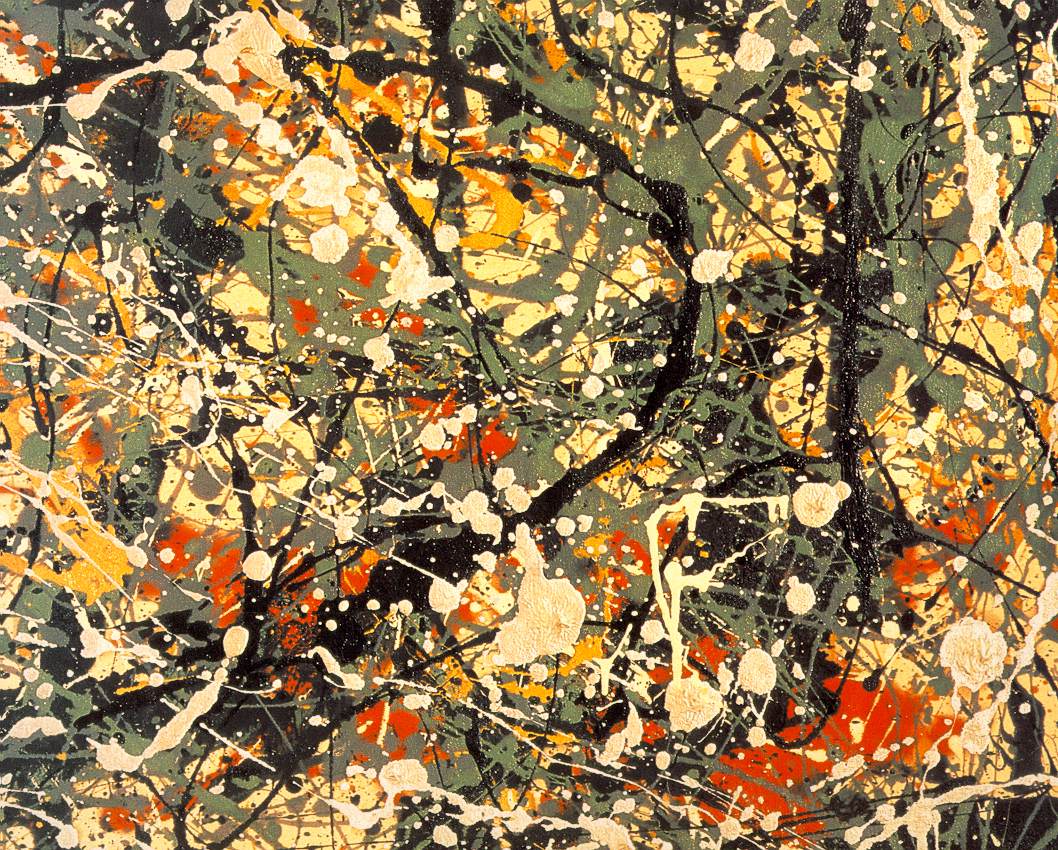
This metaphor is rooted in the understanding of the "arts" (of which I am not the most informed so hang with me).
My wife shares with me that Classical music has certain rules that composers had to follow. So if you were going to do one thing in the musical composition, then you were required to do something else. Certain harmonies are 'allowed' and others are not. This is in part why, I think, classical music will not have a chord that you hear in jazz music. Speaking of jazz, it operates the same way. If you are working under the rules of jazz, then you have to honor those rules of the art.
In the world of the visual arts, if you were painting in the modern age, then you also had rules that you followed. I am not sure what those rules are (thus my lack of knowledge in the arts), but you might be able to see these "rules" applied to impressionist art. These visual arts, when you were working under these different 'rules', had requirements that you obliged by and honored and everyone followed them.
I get this feeling when I see Pollock's art and think, "that is just paint dumped on a canvas, that is not art. I could do that!" My brain is viewing "art" as that which follows a set of rules (which I may not be able to define), and if it violates those rules then I declare it as "not art".
Post-modernism is that time that is upon us that come to the understanding that respects these different sets of "rules". It seems to suggest that we are now no longer limited in our scope of expression and understanding of the world. We now understand that all of these sets of "rules" that exist all have truth in them and no one set of rules has all the truth. There is no one painting that ends the need to have paintings. As great as Dylan was, even Bob Dylan did not end the need to create more music. He did not have exclusive and exhaustive access to music truth.
We live in a time that respects more sets of "rules" in such a way that we no longer require everyone to play by the same set of "rules" in order to paint, compose music or even create theology.
Post-modernism is the rule that respects all the rules.
(Which is why many post-moderns will argue with you when you do not respect all sets of rules.)

Be the change by Jason Valendy is licensed under a Creative Commons Attribution-NonCommercial-ShareAlike 3.0 Unported License.